NYC Museum Group Travel Guide for Easy Visits
A museum day can lose momentum before the first gallery if 40 guests arrive in separate vehicles, enter through different doors, or discover that their timed admission begins in ten minutes. This NYC museum group travel guide helps organizers build a practical plan around the details that matter most, including admission windows, vehicle access, lunch timing, mobility needs, and a reliable return schedule.
For corporate groups, schools, tour organizers, families, and private event planners, the goal is not simply reaching a museum. It is getting everyone there together, on time, and ready to enjoy the visit. A professionally driven private vehicle gives the group one meeting point, one schedule, and one clear plan for the day.
Build Your NYC Museum Group Travel Plan Around Timed Entry
Many major New York museums use timed tickets, group reservations, or designated entry procedures. Your transportation schedule should begin with the museum confirmation, not with a general estimate of travel time. A 10:00 a.m. admission window may require the group to be at the entrance by 9:40 a.m., especially when security screening, ticket distribution, coat checks, and student counts are involved.
Ask the museum whether groups have a separate entrance, required arrival time, bus drop off instructions, and rules for late arrivals. These policies can differ by institution and may change for special exhibitions, holiday periods, and high attendance weekends. A careful plan leaves room for traffic, passenger boarding, and a short walk from the approved curbside drop off point.
For a Manhattan itinerary, it is wise to schedule a meaningful buffer before the first reservation. Traffic patterns can shift quickly around Central Park, Midtown, Museum Mile, and Lower Manhattan. A group that reaches the neighborhood early can wait comfortably on the vehicle or take a short walk nearby. A group that arrives late may miss a carefully planned entry window.
Choose the Museum Experience That Fits Your Group
New York City offers museums for nearly every interest, but group needs vary considerably. The Metropolitan Museum of Art works well for guests who want broad collections and a full morning or afternoon of viewing. The American Museum of Natural History is a popular choice for school groups and families because its exhibits support a range of ages and learning interests. Modern art focused programs may prefer the Museum of Modern Art, while history focused groups may plan time at the National September 11 Memorial and Museum.
The right choice depends on the group’s purpose and available time. A corporate group with a lunch reservation may need a focused visit of two hours. A school field trip may need more time for orientation, learning activities, lunch, and restroom breaks. A family reunion may prefer a museum near other sightseeing stops so different generations can enjoy the day without long transfers.
Avoid trying to visit too many museums in one day. Two nearby institutions can work when the group is small, energetic, and working with a flexible schedule. For larger groups, one major museum plus a meal and a nearby attraction usually creates a calmer, more enjoyable experience.
Match the Vehicle to the Group and the Itinerary
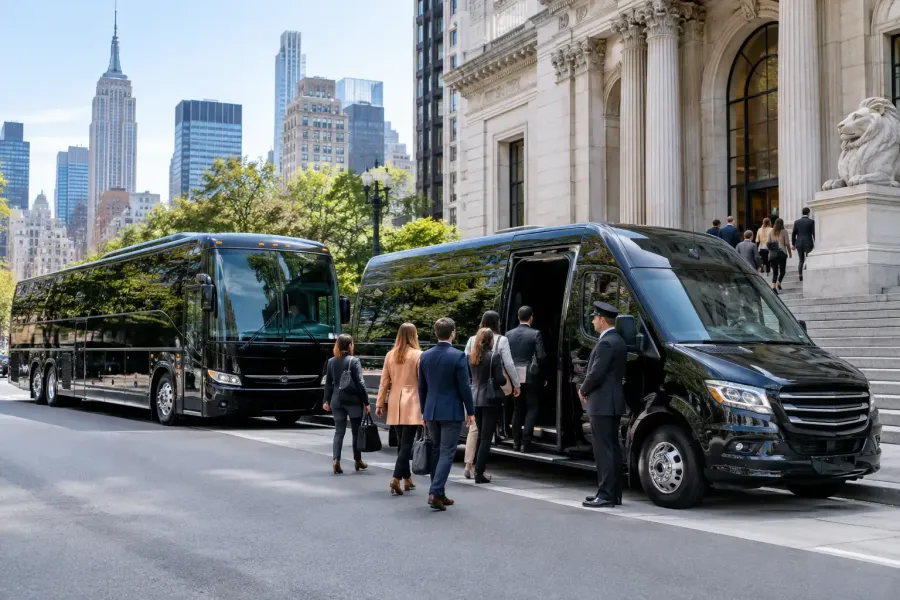
Vehicle selection affects far more than passenger capacity. It determines how comfortably guests can travel, where luggage or personal items can be kept, and how the group handles a full day of city activity. A Mercedes Benz Sprinter van is well suited for smaller private groups of up to 14 passengers. A 24 or 36 passenger minibus offers a practical option for organized tours, employee outings, and medium sized school or family groups.
For larger groups, a full size motor coach can accommodate up to 56 passengers. This option may include a restroom and WiFi, which can be especially helpful for a longer itinerary beginning on Long Island or including multiple New York City destinations. Keeping everyone on one vehicle also makes headcounts and departure times much easier to manage.
Share the full itinerary with your transportation provider before confirming the vehicle. Include the museum name, admission time, hotel or office pickup, meal reservations, any second destination, and the final drop off location. If guests are arriving from JFK International Airport, LaGuardia Airport, or Newark Liberty International Airport, build their flight schedules into the plan rather than assuming every traveler will be ready at the same time.
Plan Arrival and Departure Procedures Carefully
Museum neighborhoods have limited curb space, active pedestrian traffic, and rules that can affect where a vehicle may stop. Your driver should receive the group’s confirmed arrival instructions in advance. The organizer should also identify a group leader who can communicate with the driver and museum staff if a timing adjustment is needed.
Before departure, give guests a simple schedule that includes the pickup location, boarding time, museum entry time, lunch plan, and return meeting point. Boarding time should be earlier than the planned departure time. This small distinction prevents one delayed guest from affecting the entire itinerary.
At the museum, designate a clear reunion location for the end of the visit. Large galleries, crowded lobbies, and multiple exits can make it difficult to gather everyone quickly. A good meeting point is specific, easy to find, and shared with every guest before they enter. The group leader can complete a headcount before contacting the driver for pickup.
Account for Accessibility and Personal Needs
An inclusive plan considers mobility devices, limited walking tolerance, sensory needs, dietary requirements, and the pace of the group. Confirm museum accessibility services in advance, including elevators, accessible entrances, wheelchairs, and seating availability. Let your transportation provider know about any mobility considerations so the appropriate vehicle and boarding arrangements can be planned.
Museum days often involve more walking than guests expect. Even within one institution, galleries can cover multiple floors and long corridors. Plan a realistic visit length, schedule rest periods, and avoid placing too many commitments back to back. Comfort is not an extra detail. It directly affects how much guests can enjoy the experience.
Make Time for Meals Without Splitting the Group
Food planning is one of the most common reasons a museum itinerary falls behind. Museum cafes can be convenient, but they may not be the right fit for a large group with a limited lunch period. Confirm whether advance cafe reservations, boxed lunches, or designated student meal areas are available. If dining off site, choose a restaurant that can accommodate the group promptly and is close enough to avoid an unnecessary vehicle transfer.
For school groups, clarify policies on packed lunches, water bottles, and permitted bags. For corporate and private groups, consider whether a seated lunch is part of the experience or simply a functional break before the next destination. The answer will shape both the transportation timing and the overall pace of the day.
Coordinate School and Corporate Museum Visits
School organizers should prepare a roster, emergency contact information, chaperone assignments, and a clear buddy system. Divide students into manageable groups before arrival, not in the museum lobby. Each chaperone should know the schedule, meeting point, and the procedure if a student becomes separated from the group.
Corporate organizers benefit from the same level of clarity. Share departure times through the event calendar, confirm the pickup point in writing, and appoint one onsite contact who can make decisions if the program runs late. If the museum visit is part of a conference, client program, or executive retreat, reserve enough time for guests to return to the vehicle and settle in before the next meeting.
New York Bus Service helps organizers coordinate private transportation for museum visits throughout New York City and from Long Island. With an experienced professional driver and a vehicle selected for the group’s size, organizers can focus on the museum program rather than coordinating multiple cars, parking concerns, and staggered arrivals.
A successful museum visit feels unhurried even when the schedule is precise. Give your group a clear plan, allow time for the city’s real conditions, and make the ride between each part of the day a comfortable place to regroup.