Wedding Shuttle Routing Examples That Keep Guests On Time
A wedding schedule can be perfectly planned until guests begin arriving late, circling for parking, or calling the couple because they are unsure where to go. Well planned wedding shuttle routing examples show how one transportation plan can keep the ceremony, cocktail hour, reception, and final departure on schedule while giving guests a more comfortable experience.
For weddings in New York City, Long Island, and the Hamptons, routing requires more than selecting a vehicle. The best plan accounts for guest origin points, venue access, traffic patterns, loading space, ceremony timing, and how guests will return at the end of the evening. Here are practical route models that couples, planners, and families can adapt to their event.
Start With the Guest Journey, Not the Vehicle
A shuttle route should follow the actual path your guests need to take. Begin by identifying where most people will be before the ceremony, where they need to arrive, and whether they will need transportation between multiple venues. A hotel, a designated neighborhood pickup point, or a nearby parking area may be the right starting point.
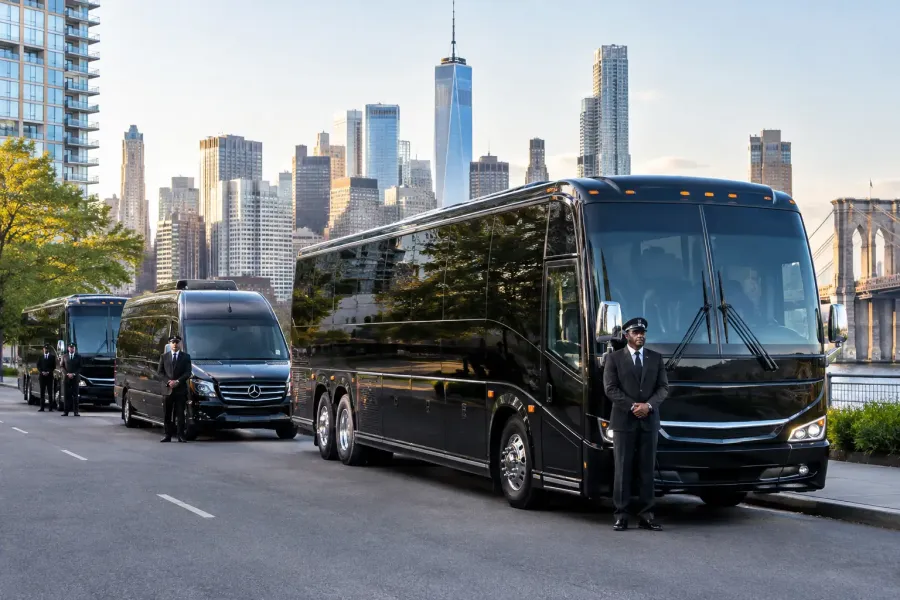
Then consider the number of passengers traveling at each time. A Mercedes Benz Sprinter van can be a practical choice for up to 14 passengers. A 24 or 36 passenger minibus works well for many wedding groups, while a full size motor coach can accommodate up to 56 passengers and may be particularly useful when a large guest list is staying at one hotel.
The goal is not always to fit everyone onto one vehicle. In some cases, two smaller vehicles on separate schedules reduce waiting and make loading easier at a venue with limited curb space.
Wedding Shuttle Routing Examples for Common Plans
One hotel to one venue
This is the most straightforward route, but it still benefits from careful timing. Imagine 80 guests staying at a hotel in Garden City and attending a reception at an estate venue nearby. Rather than assigning every guest to one departure, schedule two outbound runs.
The first vehicle can leave 75 minutes before the ceremony, allowing early arrivals to settle in, greet family, and find their seats. The second can leave 35 to 45 minutes before the ceremony for guests who prefer more time at the hotel. The precise departure time depends on drive time, expected traffic, venue entry procedures, and whether the wedding party will use a separate vehicle.
For the return, plan several departure windows. An early return after dinner helps older relatives, families with children, and guests who do not intend to stay until the end. A second departure can follow the final dance, with a final sweep after all personal belongings are collected. This approach avoids asking every guest to leave at the same moment.
Hotel, ceremony, and reception at separate locations
A church ceremony in Manhattan followed by a reception in Brooklyn introduces a different set of needs. Guests may be unfamiliar with city traffic, parking restrictions, and the time needed to board and exit a vehicle. The route needs a realistic buffer, especially on a Friday afternoon or during a major event near either venue.
In this example, a motor coach or minibus may collect guests from the hotel, arrive at the ceremony site early enough for calm unloading, then remain available for the transfer to the reception. The driver should have confirmed pickup locations, passenger loading instructions, and the best place to stage between events.
It can also help to release guests in groups after the ceremony. Immediate family and elderly guests may board first, followed by the remaining guests. A coordinator or designated family member can assist with headcounts and communicate clearly when it is time to board.
City guests traveling to a Long Island venue
Many Long Island weddings include guests staying in Manhattan, Brooklyn, Queens, or Long Island City. A direct route from a city hotel to the venue can be more convenient than asking guests to rent vehicles or navigate unfamiliar roads after a celebration.
For example, guests can be collected at one centrally located hotel in Manhattan, with a second pickup at a Queens hotel if enough guests are staying there. Whether two stops are practical depends on the direction of travel and ceremony time. A second stop that adds only a few minutes may simplify the guest experience. A stop that creates significant delay may be better served by a separate vehicle.
For a later evening return, provide the exact departure windows before the wedding day. Guests should know where to meet the vehicle, what time boarding begins, and whether the final run will leave promptly. Clear instructions reduce last minute calls and prevent a few late guests from delaying everyone else.
Hamptons wedding with off site lodging
Hamptons weddings often involve guests staying across several towns, which makes a single pickup route less practical. A couple may have groups in Southampton, East Hampton, Sag Harbor, and Bridgehampton, with the reception at a private estate or venue in Water Mill.
A useful model is to establish two geographic routes. One vehicle can serve the western lodging group, while another serves the eastern group. Each route should have a limited number of stops, ideally at hotels or highly recognizable locations with room for safe passenger loading.
Avoid designing a route that attempts to pick up guests at many individual homes. It may appear thoughtful, but it increases the risk of delays and confusion. A central pickup location keeps the schedule dependable and allows professional drivers to focus on safe, punctual service.
Ceremony transportation for family and the wedding party
Not every wedding transportation plan needs to carry the full guest list. Sometimes the highest value route serves the people with the most time sensitive responsibilities. A Sprinter van can transport the wedding party from a hotel to the ceremony, while a minibus carries immediate family members who may otherwise arrive separately.
This routing model is especially helpful when parking is limited or when family members need assistance getting to and from the venue. The wedding party vehicle can also be scheduled for photos between the ceremony and reception, provided the itinerary includes enough time for loading, travel, and unexpected traffic.
Build Time Buffers Into Every Route
The stated drive time is only one part of a wedding transportation schedule. Loading a full motor coach, locating guests in a hotel lobby, dealing with a blocked curb, and navigating venue access can all add minutes. A good route protects the event schedule with reasonable buffers rather than relying on ideal conditions.
For most wedding trips, plan for guests to arrive 20 to 30 minutes before they need to be seated. For a city ceremony or a venue with a single entrance, additional time may be appropriate. Your transportation provider can help determine practical departure times based on the date, locations, passenger count, and vehicle type.
Return transportation needs the same attention. Guests tend to leave at different times, and the final departure should reflect the actual end of the reception, not simply the time printed on an invitation. If there is an after party at another location, confirm whether it needs its own route or whether guests will make their own arrangements.
Give Guests Clear, Simple Instructions
Even a well designed route can fail if guests do not know where to be. Include transportation details on the wedding website, welcome message, or itinerary card. State the pickup address, boarding time, departure time, destination, and return schedule. Mention that the vehicle will leave on time.
Use one description for every communication channel so guests do not receive conflicting information. If there are multiple buses, identify each route by its hotel or pickup location rather than using vague labels. A planner, hotel contact, or responsible family member should also have the transportation coordinator’s day of event contact information.
Choose a Provider That Can Manage the Details
The strongest wedding transportation plans are built around confirmed information. Before booking, share guest counts, venue addresses, timing, hotel locations, luggage needs, and any mobility considerations. Ask about vehicle capacity, passenger loading procedures, driver scheduling, and how the plan will be handled if traffic affects the route.
New York Bus Service provides wedding transportation options ranging from Mercedes Benz Sprinter vans to minibuses and full size charter buses. Our professional drivers and personalized scheduling help groups travel throughout New York City, Long Island, and the Hamptons with greater confidence.
A thoughtful route gives your guests one less decision to make on a meaningful day. When pickup points are clear, timing is realistic, and the right vehicle is assigned to each group, everyone can focus on the celebration instead of the trip there.