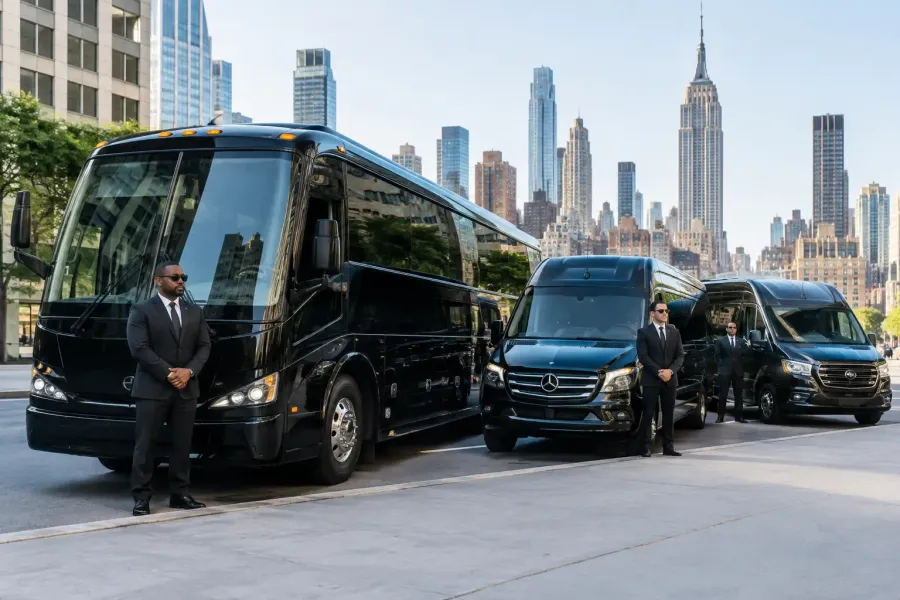
Film Production Transportation Examples in NYC
A production can lose valuable time before the first scene is filmed if cast, crew, luggage, and essential gear arrive in separate places or at the wrong time. The most useful film production transportation examples are built around the daily realities of a shoot, including changing call times, crowded New York streets, airport arrivals, location changes, and late wrap service.
For a producer, production coordinator, or location manager, transportation is not simply a vehicle reservation. It is a scheduling plan that keeps people where they need to be, protects the call sheet, and gives the team a comfortable place to travel between demanding workdays. The right vehicle depends on passenger count, luggage, route timing, and whether the group needs to remain together throughout the day.
Film Production Transportation Examples for New York Shoots
Airport transfers for cast, crew, and production guests
Airport arrivals are often the first transportation challenge of a production. A director, cast member, department head, client representative, or visiting crew may land at JFK International Airport, LaGuardia Airport, Newark Liberty International Airport, or Teterboro Airport with different arrival times and varying amounts of luggage.
A Mercedes Benz Sprinter van can be a practical choice for a small arrival group of up to 14 passengers. It provides private, professionally driven transportation for travelers heading to a Manhattan hotel, Long Island production office, studio, or filming location. For a larger crew arriving on the same flight or within a planned arrival window, a minibus can reduce the need to coordinate multiple vehicles.
The key detail is accurate flight information. A transportation plan should include the airline, flight number, terminal, number of passengers, luggage estimate, destination, and an on site contact. If arrivals are spread over several hours, separate scheduled pickups may be more dependable than asking a driver to wait through an uncertain gap. If the team has a single scheduled arrival, one vehicle can keep the group organized from the terminal to the hotel or set.
Daily crew transportation between base and set
Many productions work from a hotel, studio, parking area, or production office that is not at the filming location. A daily crew shuttle keeps department members together and gives the production a clear departure and return schedule. This is especially useful when parking near the set is limited, expensive, or restricted.
For a crew of 20 to 36 passengers, a minibus provides comfortable transportation without reserving more seats than the group needs. A full size charter bus can accommodate up to 56 passengers and is well suited to larger crews, background talent groups, or a combined team traveling from a central meeting point. Full size motor coaches may also include a restroom and WiFi, which can be valuable on longer trips to Long Island, the Hamptons, or nearby regional locations.
The route should account for the actual workday, not just the morning call time. Transportation coordinators should plan the first departure, any midday location transfer, meal break travel if needed, wrap time, and a clear procedure if the schedule runs late. A professional driver and a properly scheduled vehicle allow the production team to focus on the work rather than directing drivers through unfamiliar streets.
Cast transfers that protect privacy and timing
Cast transportation has different priorities than general crew transportation. Privacy, direct routing, flexible pickup timing, and luggage space may matter more than total seat count. A Sprinter van is often appropriate for a principal performer traveling with an assistant, stylist, security professional, or a small support team.
A private van can also support separate call times. While much of the crew may travel from a hotel at 5:30 a.m., a cast member may need a later pickup after a wardrobe or makeup appointment. Keeping those schedules separate avoids forcing a large group to wait and helps production management maintain a precise arrival plan.
For cast movements between a trailer area, studio, interview location, premiere event, or press appearance, the transportation provider should receive only the itinerary details needed to complete the service. Clear communication, a professional driver, and a clean vehicle create the dependable experience expected for time sensitive transfers.
Location changes during a split day
A split day can create more transportation pressure than a standard single location shoot. The team may begin in Brooklyn, move to Manhattan for an afternoon interior scene, and finish in Queens after dark. Every location change requires the production to account for passenger counts, gear, personal bags, meals, parking restrictions, and the time required to load and unload.
For this type of schedule, keeping the same vehicle and driver assigned for the day is often the simplest option. The driver becomes familiar with the group’s timing, approved pickup points, and next destination. Production staff can communicate changes through one designated contact instead of trying to coordinate new transportation at each location.
Not every passenger needs to travel together. Department heads may need a separate van for an earlier arrival, while the main crew follows on a minibus. The best plan depends on how many people must be present for setup, who can arrive later, and whether there is secure space for bags or production materials at each location.
Background talent transportation
Background talent may need transportation from a designated meeting location to the set, particularly when filming in areas with limited parking or difficult access. A charter bus provides an organized way to bring a large group to the same place at the same time, then return them after their work is complete.
This approach also gives production staff a predictable passenger count. Instead of managing numerous individual arrivals, the team can conduct check in at the departure point and confirm that the group is on board before leaving. For productions with staggered holding calls, more than one departure may be necessary. That is a scheduling question that should be resolved before the shoot day, not after the first group has already arrived.
Transportation for agency clients and production meetings
Commercial shoots, branded content projects, and studio productions may involve agency teams, clients, creative partners, and executives who need transportation separate from the working crew. Their itinerary may include a hotel pickup, a set visit, a working lunch, an evening dinner, and a return trip.
A private Sprinter van or minibus creates a comfortable, coordinated experience for this group. It also prevents the production office from managing individual directions, parking questions, and late arrivals. For executive guests who are unfamiliar with New York City, a professional driver offers a calmer alternative to navigating a busy schedule independently.
Wrap transportation for late nights
Wrap transportation is one of the most practical examples because it supports both schedule control and crew comfort. After a long shoot day, crew members may be tired, equipment may still be loading out, and public transit schedules may be less convenient. A scheduled return vehicle allows the group to leave together once released.
The transportation coordinator should avoid setting the return pickup at the exact anticipated wrap time. Productions often run later than expected. A better plan includes a realistic pickup window and a designated person authorized to update the driver if the schedule changes. For late night work, confirm the final destination, passenger count, and whether any crew members require a separate drop off plan.
Choosing the Right Vehicle for the Production Day
Vehicle selection begins with people, then considers travel time and luggage. A Mercedes Benz Sprinter van accommodates up to 14 passengers and works well for small cast groups, airport transfers, executives, or department heads. A 24 or 36 passenger minibus is a strong option for crew shuttles and medium sized groups. A full size motor coach accommodates up to 56 passengers and can support larger crews, background talent, or longer regional trips.
Comfort features should match the route. A short transfer across Manhattan may require a different vehicle plan than a full day traveling between New York City and the Hamptons. Restroom access and WiFi can be useful for longer passenger trips, but punctual service, adequate seating, and room for personal belongings should remain the foundation of the decision.
Details to Confirm Before Transportation Is Scheduled
A reliable production transportation plan starts with a complete itinerary. Provide pickup and drop off addresses, call times, passenger counts, vehicle needs, flight details when applicable, luggage estimates, and the name and phone number of the primary transportation contact. If the set location has gate access, security procedures, restricted streets, or a specific staging area, share those instructions in advance.
It also helps to identify what may change. A production might need an extra airport arrival run, a later wrap time, or a vehicle transfer to another location. These possibilities do not always require a complicated plan, but they should be discussed early so the transportation provider can schedule appropriately.
New York Bus Service supports production teams with private Sprinter vans, minibuses, and full size charter buses for coordinated travel throughout New York City, Long Island, and the Hamptons. With a clear itinerary and one dependable point of contact, transportation can become one of the most predictable parts of a demanding shoot day.
When the day’s schedule changes, the best next step is simple: communicate the revised time and location as soon as possible. That timely update helps keep the vehicle, driver, and production team aligned for the next move.