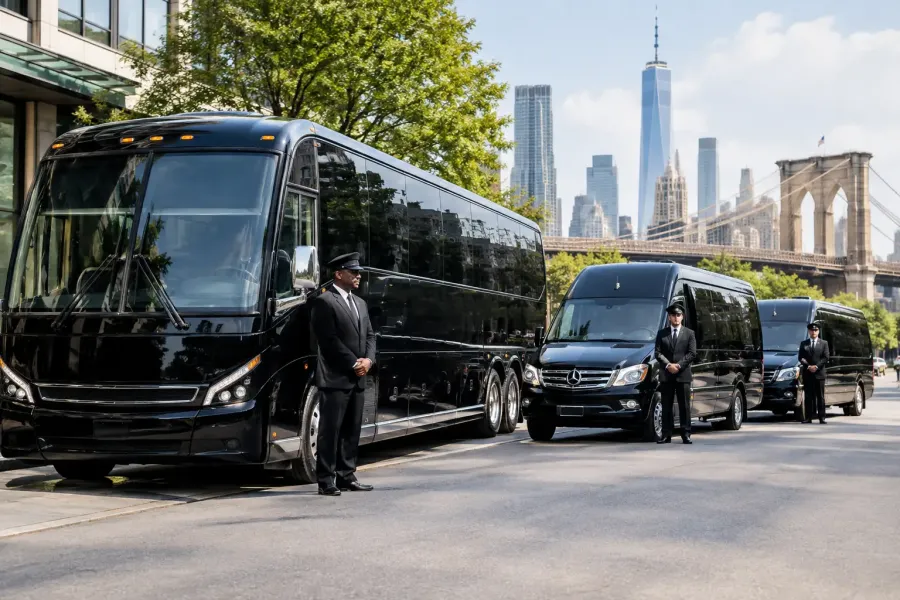
Corporate Roadshow Transportation Examples That Work
A corporate roadshow can look simple on a calendar, several meetings in several locations. In practice, every arrival affects the next one. Corporate roadshow transportation examples show why a professionally planned vehicle and driver are often the difference between a controlled schedule and a day spent managing missed connections, luggage, traffic, and separate arrival times.
For executive assistants, corporate administrators, and event planners, the goal is not merely getting people from one address to another. It is keeping executives, presenters, clients, and support staff together, prepared, and on schedule. The right transportation plan accounts for passenger count, meeting timing, luggage, airport arrivals, vehicle access, and realistic travel time throughout New York City and Long Island.
Corporate Roadshow Transportation Examples for New York
The best vehicle choice depends on the group, the itinerary, and the purpose of the roadshow. A vehicle that is ideal for a small executive team may not provide enough space for a group traveling with presentation materials, event staff, or airport luggage.
Executive meetings across Manhattan
A common roadshow involves a senior leadership team attending several client meetings in Manhattan in one day. Rather than arranging individual transportation for each participant, a Mercedes Benz Sprinter van can keep up to 14 passengers together between office buildings, hotels, restaurants, and meeting venues.
This option works well when the group needs a professional arrival without the size of a full motor coach. It also gives the team a private space to review notes, make calls, and prepare between appointments. The driver follows the agreed itinerary while the organizer has one point of coordination instead of tracking several vehicles.
For a roadshow with stops in Midtown, the Financial District, and a dinner in another part of the city, scheduling matters as much as the vehicle. Meeting end times can shift, and traffic conditions can vary sharply by time of day. Building reasonable time between appointments helps the driver adjust while protecting the rest of the schedule.
Investor visits from the airport to Long Island offices
Another frequent scenario begins with airport arrivals. A visiting group may land at JFK International Airport or LaGuardia Airport, then travel directly to offices in Garden City, Melville, Hauppauge, or another Long Island business center. They may need to visit two locations before checking into a hotel or departing for an evening dinner.
A private minibus is often a practical choice for groups of 24 or 36 passengers. It provides room for attendees and luggage while allowing the group to leave the airport together. For organizers, this removes the uncertainty of staggered departures and makes it easier to confirm that every guest is accounted for before the first meeting begins.
Airport roadshows require a detailed manifest and clear communication before travel day. Flight numbers, arrival windows, passenger totals, luggage expectations, terminal instructions, and primary contact information should be confirmed in advance. If the group includes international travelers or guests on separate flights, the pickup plan should allow enough flexibility for customs, baggage collection, and late arrivals.
Product launch teams visiting multiple venues
Product launches can involve executives, sales representatives, technical staff, media guests, and event equipment. A roadshow may include a morning presentation in Brooklyn, an afternoon client event in Queens, and an evening reception in Manhattan. In this case, a 36 passenger minibus or full size motor coach can simplify a complicated event day.
The appropriate vehicle depends on whether the group is traveling together for the full program and how much equipment must be carried. A full size motor coach accommodates up to 56 passengers and may include a restroom and WiFi. That can be especially useful for longer travel days, trips between New York City and Long Island, or schedules where passengers need time to work during travel.
A larger vehicle is not automatically the right answer. If the group has fewer attendees and must access narrow streets or limited loading areas, a minibus may be more practical. The transportation provider should understand every stop, including venue entrances, curb access, loading requirements, and the time needed for passengers to board and exit safely.
Regional leadership tours and site visits
Companies with offices, retail locations, construction sites, campuses, or operational facilities often need leadership teams to visit several properties in one day. These trips may start in Manhattan, continue through Nassau or Suffolk County, and end with a team dinner or hotel return.
For these itineraries, the value of private group transportation is consistency. Executives arrive together, site hosts know when to expect the group, and the itinerary remains under the control of one transportation coordinator. A professional driver also allows passengers to focus on the visit instead of directions, parking, or unfamiliar roads.
This format is useful for board visits, franchise tours, corporate training sessions, and property inspections. It also works when the group includes out of town leaders who need a clear, comfortable introduction to the region without the added pressure of navigating between locations.
How to Plan a Corporate Roadshow Vehicle Schedule
Corporate transportation succeeds when the schedule is built around actual operating conditions, not only appointment times. A meeting listed from 10:00 a.m. to 11:00 a.m. may require passengers to be at the next venue before 11:30 a.m., allowing time to exit the first building, board the vehicle, travel, and enter the second location.
Start by identifying the complete passenger count at each leg of the trip. Some roadshows have a core executive group, while other attendees join only for specific meetings or airport transfers. This determines whether one vehicle is sufficient or whether a separate transfer arrangement is needed for certain guests.
Next, document every pickup, stop, and final drop off. Include full addresses, preferred entrances, meeting start times, luggage needs, and a contact person at each location. If there are airport pickups, provide flight details and identify the person authorized to make schedule decisions if a flight is delayed.
It is also wise to include buffer time between critical meetings. New York City traffic, venue access, weather, and passenger boarding can all affect the day. A realistic schedule does not mean building excessive idle time. It means giving the driver and group enough room to handle normal variations without disrupting a major presentation or client meeting.
What a Roadshow Transportation Partner Should Provide
A corporate organizer should expect more than a vehicle. The service should include a properly scheduled itinerary, a professional driver, a clean and well maintained vehicle, and clear communication before travel day. For high visibility meetings, the transportation experience reflects on the company hosting the roadshow.
Vehicle selection should be based on the full requirement. A Sprinter van is effective for an executive team of up to 14 passengers. A 24 or 36 passenger minibus suits medium size groups, airport transfers, and multi location meeting programs. A full size motor coach is appropriate for larger delegations of up to 56 passengers, particularly when restroom access and WiFi support a longer itinerary.
Safety and reliability should remain central to the decision. Experienced professional drivers, inspected vehicles, and thoughtful route planning help organizers manage a demanding schedule with confidence. The right provider will ask practical questions before confirming service, because details such as luggage volume, venue restrictions, and pickup timing directly affect the transportation plan.
New York Bus Service supports corporate groups throughout New York City and Long Island with Sprinter vans, minibuses, and full size motor coaches sized for the itinerary. Whether the day involves airport arrivals, executive meetings, client visits, or a regional company tour, a clear transportation plan gives your team more time to focus on the work that brought them together.
When planning your next roadshow, begin with the schedule your guests must keep, then choose the vehicle and service plan that protects it.