How to Prepare a School Trip With Confidence
A successful field trip is often decided before students ever leave campus. When staff prepare a school trip with clear roles, accurate schedules, and dependable transportation, the day feels organized for students, chaperones, and families. The goal is not simply to get everyone to a destination. It is to keep the group together, on time, comfortable, and ready to learn.
Start With the Educational Purpose and the Real Schedule
Every school trip needs a purpose that is easy to explain to families, administrators, and students. Whether the group is visiting a museum, attending a college program, competing at an academic event, or seeing a performance, define what students should gain from the experience. That purpose helps staff make sound decisions about timing, supervision, meals, accessibility, and the destination itinerary.
Build the schedule from the fixed parts of the day first. Confirm the destination’s arrival window, entry process, guided program time, lunch arrangements, and required departure time. Then allow realistic time for students to gather, board, use restrooms, and move through security or ticketing. A schedule that looks efficient on paper can become stressful if it assumes a large group can transition instantly.
For New York City and Long Island trips, travel time also depends on the time of day, the route, school dismissal traffic, and destination access. Ask the venue where buses can safely load and unload. Some locations have designated areas, restricted streets, or limits on how long a vehicle may wait. Confirming these details early prevents last minute confusion at the curb.
Set a Clear Planning Structure
One lead organizer should oversee the plan, but a school trip works best when responsibilities are distributed. Assign staff members to student records, permission forms, health information, family communication, chaperone coordination, and day of travel procedures. Everyone should know who can make decisions if a schedule changes.
Create one master itinerary that includes the school address, destination address, pickup time, planned arrival, program times, meal breaks, driver contact procedures, and return plan. Share a simplified version with families and a detailed version with staff and chaperones. The transportation provider should receive the complete operational itinerary, including all stops and the preferred loading location.
A useful itinerary also identifies the practical details people tend to overlook. Note where bags will be stored, whether students need identification, what clothing is appropriate, whether food is permitted, and the process for students who need medication or special support. Clear expectations reduce repeated questions on the morning of departure.
Confirm Participation Before Selecting the Vehicle
Get a reliable passenger count before finalizing transportation. Count students, teachers, chaperones, nurses, aides, and any approved guests. It is better to plan for the confirmed total than to assume seats will be available at the last moment.
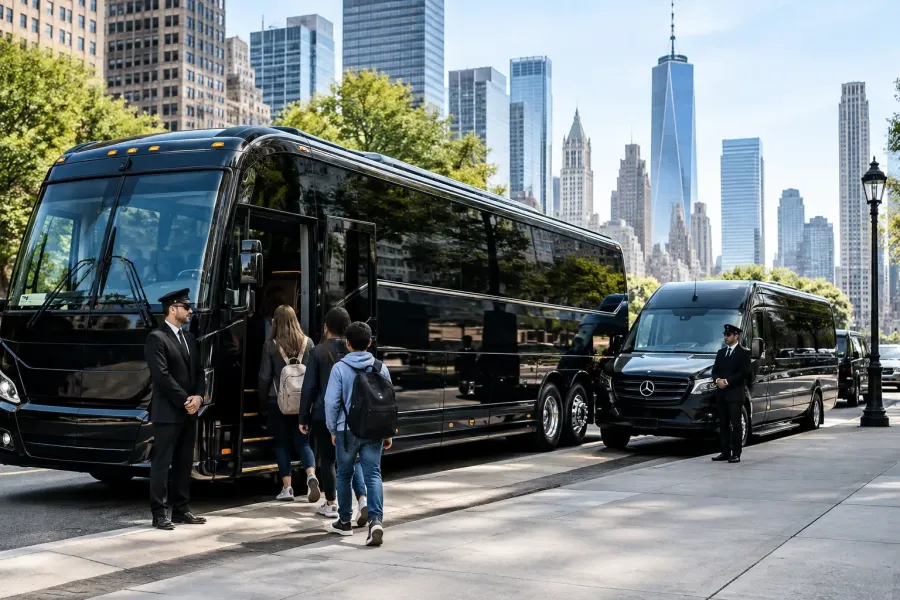
Vehicle selection should match both the group size and the trip length. A Mercedes Benz Sprinter van can work well for a smaller group of up to 14 passengers. A 24 or 36 passenger minibus may suit a single class or smaller school activity. For larger groups, a full size motor coach can accommodate up to 56 passengers and may include a restroom and WiFi, which can be especially helpful on longer regional trips.
Capacity is not the only consideration. Think about luggage, instruments, sports equipment, mobility devices, and coolers. If the group has substantial gear, disclose it in advance so the transportation plan accounts for space and boarding needs.
Put Safety and Supervision Into the Travel Plan
Safety planning should be specific, not assumed. Establish the student to chaperone ratio required by school policy, then consider the setting. Younger students, crowded venues, and destinations with several separate activity areas may require additional supervision.
Before departure, divide students into manageable groups and assign each group to a named adult. Give chaperones a roster, emergency contacts according to school policy, the itinerary, and a clear way to communicate with the trip leader. Students should know their group, their adult supervisor, and where to meet if separated from the larger group.
Review behavior expectations before boarding. Students should remain seated while the vehicle is in motion, keep aisles clear, respect the driver, and follow staff instructions at every stop. This conversation is most effective when it is brief and direct, with clear consequences consistent with school rules.
It also helps to use a consistent headcount process. Count students before boarding, after unloading, before leaving each activity area, and before the return trip. A roster is more reliable than a quick visual check, particularly when students are excited or tired.
Plan for Health, Accessibility, and Weather
Ask families for relevant health and accessibility information through the school’s approved process. Confirm medication procedures, food allergies, mobility needs, and any accommodations required at the destination. The venue and transportation provider need enough advance notice to support the group appropriately.
Weather can affect both the schedule and what students need to bring. For an outdoor activity, families may need guidance on rain gear, layers, sunscreen, water, or sturdy footwear. For a winter trip, allow extra time for slower traffic and safe boarding. A thoughtful plan includes a practical response if weather changes the program or extends travel time.
Communicate Early, Then Communicate Again
Families should receive trip information early enough to complete forms, make payments if applicable, prepare students, and raise concerns. Include the educational purpose, date, departure and return windows, destination, meals, costs, clothing guidance, items to bring, items to leave at home, and contact information for the school.
A reminder a few days before the trip is just as valuable. Confirm the meeting time rather than only the vehicle departure time. Students should arrive early enough for attendance, final instructions, and orderly boarding. Explain what happens if a student arrives late, because delaying an entire group can affect the destination reservation and return schedule.
For staff and chaperones, send a separate message with supervisory assignments and the complete itinerary. They should know where the group will enter, where the bus will meet them after the visit, and how to handle a student who needs assistance. Clear communication gives adults confidence and helps students feel secure.
Work With a Professional Transportation Partner
Transportation is not a detail to arrange after the rest of the trip is planned. The vehicle schedule shapes the entire day. Reserve early, especially for popular spring dates, graduation season, major city events, and trips that require several buses.
When requesting service, provide accurate information about passenger count, pickup location, destination, timing, multiple stops, special equipment, and accessibility needs. Ask about the vehicle type, expected capacity, driver coordination, and whether a restroom is available for longer travel. A professionally planned charter bus reservation gives organizers one point of coordination instead of asking multiple adults to drive separate vehicles.
New York Bus Service helps schools coordinate professionally driven transportation for field trips, campus visits, performances, and academic events throughout New York City and Long Island. A clean, properly scheduled vehicle and an experienced driver allow school staff to focus on students rather than route logistics.
Use a Departure Day Checklist
The morning of the trip should follow a simple routine, not a scramble. Confirm attendance before boarding, review the itinerary with staff, verify that chaperones have their assigned groups, and make sure students have required tickets, identification, lunches, or medication arrangements. Keep a printed roster available even if information is stored electronically.
At pickup, designate one staff member to speak with the driver about the day’s schedule and the return pickup plan. Confirm the best contact number for operational updates. If the group will visit more than one location, review each stop in order so there is no uncertainty later.
Once everyone is seated, take a final count and begin the trip with a calm, clear reminder of expectations. Students remember the destination, but families and school leaders also remember whether the day felt safe, punctual, and well managed. Careful preparation gives everyone the confidence to enjoy the experience from the first boarding call to the final return to school.