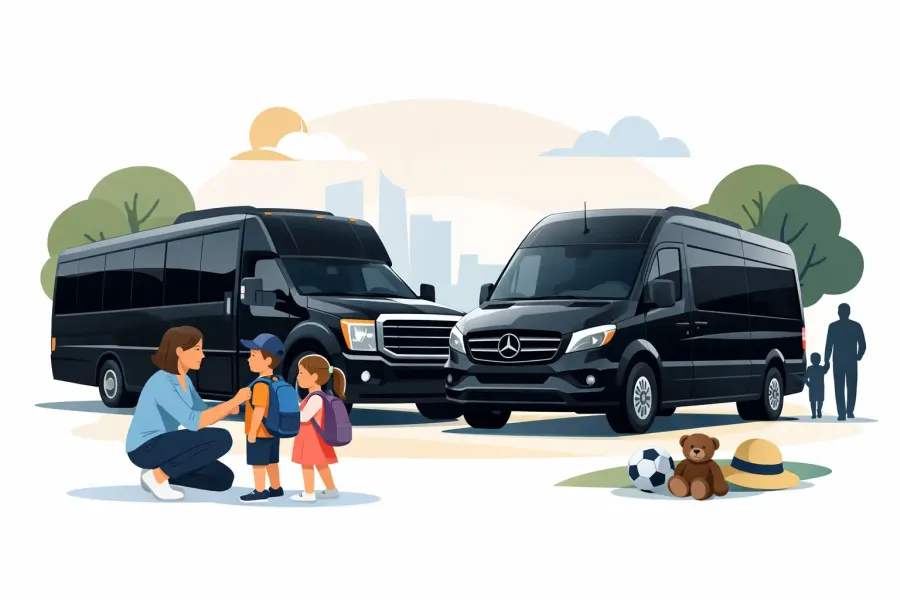
Are Buses Suitable for Children? A Parent Guide
A field trip group waiting at a Manhattan museum, a youth team heading to an early game, or several families traveling together to a Long Island celebration all face the same practical question: are buses suitable for children? When the vehicle, driver, itinerary, and adult supervision are planned correctly, private bus transportation can be one of the most organized and comfortable ways to travel with young passengers.
The key is not simply choosing a large vehicle. It is choosing transportation that matches the children’s ages, group size, trip length, luggage needs, and the policies of the school, camp, team, or family group. A professionally driven bus keeps the group together, reduces the need for multiple cars, and gives organizers one clear schedule to manage.
Are Buses Suitable for Children on Group Trips?
Yes, buses are well suited to many children’s group trips, particularly when a responsible adult plans the trip with the transportation provider in advance. For school outings, campus visits, youth sports events, birthday celebrations, sightseeing, and airport transfers, a private vehicle provides a designated place for the entire group to board, ride, and arrive together.
For organizers, keeping the group in one vehicle is a major operational benefit. There are fewer arrival times to track, fewer parking concerns at busy destinations, and less risk of a child being separated from the main group during transit. This can be especially valuable in New York City, where traffic, curb access, and parking can make a multi-car plan difficult to coordinate.
Comfort also matters. A full-size motor coach can accommodate up to 56 passengers and may include a restroom and Wi-Fi, which can make longer regional trips more manageable. For smaller groups, a minibus or Mercedes Sprinter van may be a better fit. The right choice depends on the final passenger count, the number of adults traveling, and whether the group has equipment, strollers, backpacks, or overnight bags.
What Makes a Bus Trip Safer for Young Passengers?
Safe group transportation begins before anyone boards. A reputable provider should use properly maintained vehicles and professional drivers who understand how to operate in busy city streets, highways, school loading areas, venues, and airports. The organizer’s role is equally important: provide accurate details, establish clear supervision, and make sure families understand the trip plan.
Match the Vehicle to the Group
An oversized vehicle is not automatically the best choice, and neither is the smallest available option. A group of 12 children plus adults may travel comfortably in a Sprinter van, while a class, sports team, or large extended family may need a minibus or motor coach. Build the reservation around the actual headcount, not an estimate that leaves no room for chaperones or belongings.
Young children may require more space per passenger because of bags, booster seats, or personal comfort. Longer rides also call for more consideration than a short local transfer. If the group will be traveling from Long Island to a sporting venue, airport, or regional attraction, extra capacity can make the ride calmer and easier to supervise.
Confirm Child Restraint Needs Early
Child passenger requirements can vary by age, size, vehicle type, and trip circumstances. Families and organizers should confirm applicable requirements with the appropriate authorities and communicate their needs before reserving transportation. Do not assume that the rules for a personal passenger vehicle apply in exactly the same way to every bus or van.
If children need car seats, booster seats, or a vehicle with specific seating features, raise that requirement at the beginning of the planning process. The transportation provider can then help determine the most appropriate vehicle arrangement and whether families need to supply and install approved restraints. This is one area where last-minute planning creates unnecessary pressure.
Use a Clear Adult-to-Child Supervision Plan
A professional driver is responsible for safely operating the vehicle. Chaperones, teachers, coaches, or designated parents are responsible for supervising children. Defining those roles helps everyone travel more safely and comfortably.
Before departure, decide who will conduct headcounts, who will sit near younger riders, who will communicate with the driver, and who will check the vehicle after each stop. On a school trip, it is wise to assign children to small groups under specific adults rather than relying on one person to monitor everyone at once.
Plan the Route and Stops Around Children
Children generally handle travel better when the itinerary is realistic. A rushed schedule with no restroom breaks, no meal plan, and no buffer for traffic can turn an otherwise well-planned outing into a difficult day. Share the pickup location, destination, timing, planned stops, and special requests before the trip.
For longer outings, ask about practical details such as luggage storage, restroom availability, pickup access, and the time needed for loading and unloading. New York City destinations often have restricted curb space, so a planned meeting point can prevent confusion and keep children away from congested street activity.
When a Private Bus Is a Strong Choice
Private bus transportation is particularly useful when the group needs to stay on a defined schedule. A school class visiting several locations, a youth team traveling with uniforms and equipment, or families flying from JFK or LaGuardia all benefit from a single, professionally coordinated itinerary.
It also gives organizers more control over the travel experience. The group is not split among separate vehicles, and the departure does not depend on individual drivers finding parking or navigating unfamiliar streets. For children, traveling with their classmates, teammates, or family members can make the trip feel more predictable and enjoyable.
There are trade-offs. Very small groups may find a larger vehicle unnecessary, while a full-day itinerary with many stops may require careful planning around vehicle access and driver hours. The answer is not one vehicle for every occasion. It is a transportation plan built around the actual trip.
Questions to Ask Before Booking Children’s Transportation
A brief planning conversation can prevent most avoidable issues. Be ready to discuss the children’s approximate ages, total number of passengers, number of supervising adults, pickup and drop-off locations, trip duration, luggage, mobility needs, and any restraint requirements.
It also helps to ask how early the group should arrive for boarding, where the vehicle can safely load, and how itinerary changes should be communicated on the day of travel. If the trip includes a game, performance, airport departure, or timed admission, provide those fixed times so transportation can be scheduled with a reasonable buffer.
For a school or youth organization, confirm internal approval requirements before finalizing the vehicle. Some organizations have their own rules on chaperone ratios, permission forms, emergency contacts, and transportation documentation. A bus reservation should support those procedures, not replace them.
A Simple Day-of-Trip Routine
The smoothest children’s trips usually follow a routine. Arrive early enough to board without rushing, complete a headcount before departure, and remind children of basic onboard expectations. Keep aisles clear, remain seated when the vehicle is in motion, use appropriate volume levels, and follow the chaperones’ instructions at every stop.
Bring a printed passenger list and emergency contact information, even if information is also stored on a phone. For younger groups, a second count after every stop is essential. Coaches and teachers should also check under seats and in overhead areas before leaving the vehicle behind.
New York Bus Service helps organizers select a vehicle that fits the group and itinerary, from Mercedes Sprinter vans for smaller parties to minibuses and full-size motor coaches for larger outings. Clear scheduling and early communication allow the transportation plan to support the children, their families, and the adults responsible for the day.
A bus trip with children should feel organized before the engine starts. Choose the right vehicle, put supervision procedures in place, confirm the details that apply to your group, and give young passengers a comfortable way to travel together.