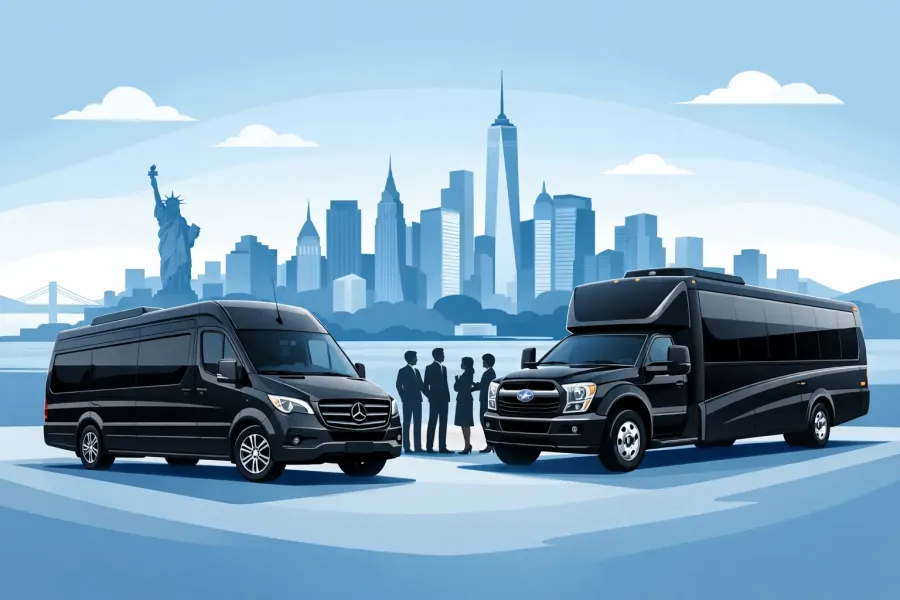
Sprinter Versus Minibus for New York Groups
A group of 12 heading to JFK with luggage has very different transportation needs than 25 colleagues traveling from Manhattan to a Long Island meeting. That is why the Sprinter versus minibus decision should start with the actual trip, not just the number of seats. The right vehicle keeps everyone together, protects the schedule, and gives passengers room to travel comfortably.
For many New York groups, a Mercedes Sprinter van is the practical choice for smaller parties. A minibus becomes the better fit when passenger count, luggage volume, or the need for more interior space increases. Both provide professionally driven group transportation, but they serve different types of itineraries.
Sprinter Versus Minibus: The Main Difference
A Mercedes Sprinter van is designed for small groups that want a private, comfortable ride without the footprint of a larger vehicle. New York Bus Service uses Sprinter vans for groups of up to 14 passengers. They are well suited to executive airport transportation, family trips, small wedding parties, private city tours, and guests traveling between venues.
A minibus is intended for medium-size groups that have outgrown a van but do not need a full-size motor coach. Depending on the vehicle selected, minibuses can accommodate approximately 24 to 36 passengers. That added capacity makes a meaningful difference for corporate outings, school groups, wedding guest transportation, sporting events, and sightseeing programs with a larger headcount.
The comparison is not only about seats. It is about balancing passenger space, bags, access to pickup locations, trip duration, and the amount of coordination your group needs.
When a Mercedes Sprinter Van Makes Sense
A Sprinter is often the strongest option when your group is close-knit and your itinerary includes locations where a smaller vehicle is easier to position. In Manhattan, Brooklyn, Queens, and many Long Island business districts, vehicle size can affect where a driver can safely load passengers and how easily the group can move between stops.
For airport service, passenger count should be considered alongside baggage. A group of eight executives with carry-on bags may fit comfortably in a Sprinter. A group of eight travelers returning from an extended vacation with multiple large suitcases may need additional room, even though the headcount is the same. Sharing luggage details at the time of booking helps ensure the vehicle matches the full load.
Sprinters also work particularly well for executive transportation. Passengers can arrive together, avoid the confusion of separate cars, and maintain a more controlled schedule between an airport, hotel, meeting, dinner reservation, or event venue. For a small group visiting New York City, a professionally driven Sprinter provides the convenience of door-to-door transportation without asking guests to navigate unfamiliar streets or coordinate multiple arrivals.
A smaller vehicle is not automatically the lower-cost choice if it requires splitting the group into multiple vehicles. If everyone needs to arrive at the same time, one appropriately sized vehicle is usually easier to manage than a plan built around separate departures.
Best uses for a Sprinter
Sprinter service is a natural fit for airport transfers with small parties, executive teams, families, bridal parties, private tours, and airport-to-hotel transportation. It is also a sensible choice for small groups traveling to a concert, stadium event, or dinner where punctual pickup and return service matter more than maximum seating capacity.
When a Minibus Is the Better Choice
A minibus is the better answer when the group is too large for a 14-passenger van or when comfort would be compromised by filling every available seat. It gives organizers more breathing room for passengers, personal belongings, and itinerary changes while keeping the entire party in one vehicle.
This matters for corporate transportation. A team traveling to an off-site meeting, conference, client event, or holiday gathering benefits from arriving as one group. A minibus reduces the likelihood of late arrivals caused by separate travel arrangements and gives the organizer one clear pickup plan, one driver, and one schedule to manage.
For weddings, a minibus can transport guests from a hotel to the ceremony, reception, or after-party without requiring relatives to drive unfamiliar routes. It is equally useful for wine tours, Hamptons outings, and private excursions where the day includes several stops and guests should be able to relax between destinations.
School and youth group travel are other situations where a minibus may be preferable. When students, chaperones, and event materials need to travel together, organizers gain more control over attendance and timing. A professionally driven vehicle also allows teachers and coordinators to focus on the group rather than directions, parking, or staggered arrivals.
Plan for the real passenger count
When selecting a minibus, do not base capacity solely on the number of invitations sent or people expected to attend. Confirm the number of passengers who need transportation for each trip segment. A wedding, for example, may need a larger vehicle after the reception than before it. An airport itinerary may require different capacity for outbound and return trips if travelers are arriving on separate flights.
It is wise to leave room for realistic changes. A vehicle that technically fits every passenger may not feel comfortable for a longer ride, especially when coats, bags, presentation materials, or personal items need to be stored onboard.
Capacity and Luggage Should Be Decided Together
The most common planning error is treating seating and luggage as separate questions. They are connected. The right vehicle for a short ride from a Manhattan hotel to a nearby venue may not be the right vehicle for a transfer to JFK, LaGuardia, Newark Liberty International Airport, or a Long Island destination.
Before requesting transportation, count passengers, estimate the number of large and carry-on bags, and consider specialty items. Golf bags, strollers, event displays, musical equipment, or boxed supplies can change the vehicle recommendation. If your group includes mobility needs, share those details early as well so the transportation plan can be arranged thoughtfully.
Trip duration also affects the decision. For a brief local transfer, a fully occupied vehicle may be acceptable. For an all-day tour or a ride from New York City to the Hamptons, added room can improve the experience considerably. Comfort supports punctuality too: passengers who can board easily and store belongings efficiently help the trip begin on time.
New York Streets and Pickup Logistics Matter
New York transportation is rarely just a route from point A to point B. Hotel entrances, office buildings, airport terminals, venue loading zones, traffic patterns, and local restrictions all influence the plan. A Sprinter may be advantageous for a small group with several tight urban stops, while a minibus may be the clear choice for a larger group departing from one central location.
Give your transportation provider complete pickup information, including the address, preferred entrance, pickup time, flight details when applicable, and all scheduled stops. For corporate events, include the onsite contact. For weddings and private celebrations, designate one person who can confirm passenger readiness and communicate last-minute changes.
A professional driver and a well-planned itinerary help keep the day organized, but the best results come from matching the vehicle to the trip before the schedule is finalized.
How to Make the Right Choice
Choose a Sprinter when you have up to 14 passengers, moderate luggage, and a smaller-group itinerary where vehicle agility and private comfort are priorities. Choose a minibus when you need to transport roughly 24 to 36 passengers, keep a medium-size group together, or allow more room for bags and longer travel.
There are situations between those two options. A group of 14 with heavy luggage might benefit from a different arrangement than a group of 18 traveling light for a short transfer. That is not a problem to solve by guessing. A transportation specialist can recommend a vehicle based on the group size, pickup points, destination, luggage, and timeline.
The goal is not to choose the smallest vehicle that can fit everyone. It is to choose the vehicle that lets your group board confidently, travel comfortably, and arrive together on schedule. Provide the full itinerary early, and the right Sprinter or minibus can turn a complicated group movement into a well-organized trip.