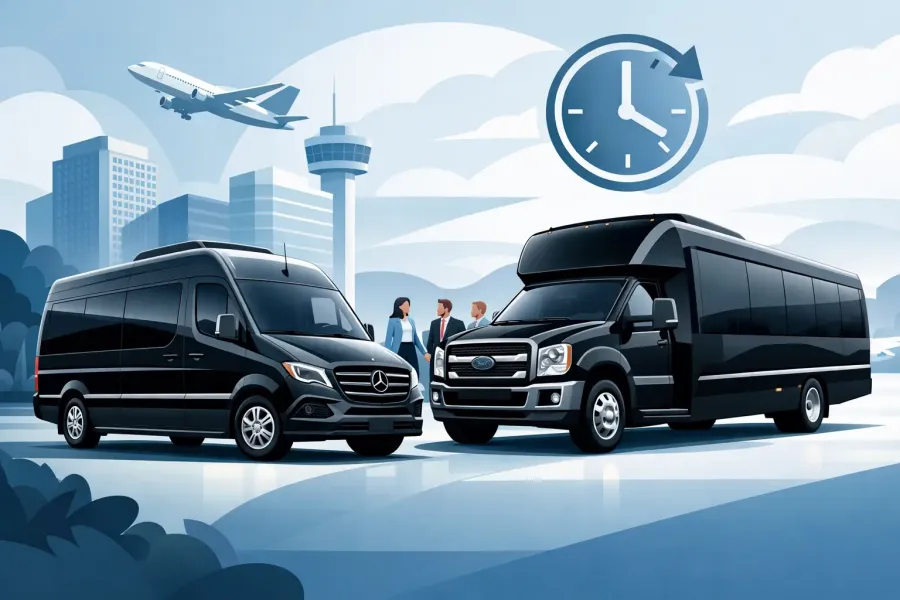
Executive Transportation That Keeps Teams On Time
A delayed airport pickup or a missed meeting arrival can affect far more than one person’s schedule. For executive assistants, corporate administrators, and event planners, executive transportation is part of the day’s operational plan. The vehicle must arrive on time, fit the group comfortably, follow the correct route, and remain coordinated as schedules change.
For business travel in New York City and Long Island, dependable group transportation replaces fragmented travel arrangements with one professionally driven vehicle and one clear point of coordination. Whether the itinerary includes an airport transfer, an off-site meeting, a client dinner, a conference, or a multi-stop corporate event, the right transportation plan helps the group arrive prepared and focused.
What Executive Transportation Should Deliver
Executive transportation is not simply a ride between two addresses. It is a scheduled service designed around professional expectations: punctual arrivals, clean vehicles, experienced drivers, appropriate passenger capacity, and communication that respects a busy itinerary.
The best option depends on the group, luggage needs, destination, and timing. A leadership team traveling from Manhattan to a Long Island strategy session has different requirements than a group of visiting executives arriving at JFK with presentation materials and checked bags. The goal is the same in both cases: remove unnecessary coordination from the day.
A properly planned service should account for pickup windows, building access, airport procedures, traffic patterns, and the time required for each stop. In the New York metropolitan area, a route that looks simple on a map can be affected by congestion, construction, event traffic, and limited curb access. Planning ahead gives the driver and transportation coordinator the information needed to keep the itinerary organized.
Choose the Right Vehicle for the Group
Vehicle selection has a direct impact on comfort and efficiency. Choosing a vehicle that is too small creates a crowded experience and can leave little room for luggage. Reserving a full-size coach for a small leadership group may not be the most practical use of the budget. Right-sizing the vehicle is one of the most useful decisions in executive transportation.
Mercedes Sprinter Vans for Small Executive Groups
A Mercedes Sprinter van is often an excellent choice for executive groups of up to 14 passengers. It offers a professional appearance, comfortable seating, and space for airport luggage or business materials. Sprinter vans work well for airport arrivals, board meetings, client visits, private dinners, and small team outings.
They are also a practical option when an itinerary includes multiple locations. A group can remain together from the first pickup through the final drop-off instead of dividing into separate vehicles and coordinating arrival times at each stop.
Minibuses for Department Travel and Events
For medium-sized groups, a minibus can provide the needed capacity without placing attendees across multiple vehicles. This is useful for corporate teams attending conferences, employee recognition events, training sessions, and regional meetings.
A minibus is especially valuable when the group has a firm schedule. Keeping attendees in one vehicle reduces late arrivals caused by individuals taking different routes or encountering separate delays. It also gives organizers a more accurate headcount before departure.
Motor Coaches for Large Corporate Groups
A full-size motor coach can accommodate up to 56 passengers and is a strong choice for large meetings, conventions, corporate outings, employee transportation, and executive events. For longer trips, features such as onboard bathroom facilities and WiFi can make the travel time more comfortable and productive.
A motor coach is not always necessary, but it becomes the most efficient solution when a large group needs to travel together. Rather than organizing several vehicles, a company can manage one departure time, one driver, and one coordinated itinerary.
Airport Transportation Requires More Than a Pickup Time
Airport travel is where planning matters most. Flights can arrive early or late, travelers may have luggage to collect, and airport pickup procedures differ by terminal. Executive airport transportation should include clear flight details, passenger counts, luggage expectations, and confirmed pickup instructions.
New York Bus Service coordinates transportation to and from JFK International Airport, LaGuardia Airport, Newark Liberty International Airport, Long Island MacArthur Airport, and Teterboro Airport. For corporate groups, this can include one-way arrivals, return departures, or a vehicle scheduled to remain available between appointments.
When booking an airport transfer, provide the flight number, arrival time, terminal when available, total passengers, and number of bags. It is also helpful to identify whether the group will travel directly to a hotel, office, event venue, or another airport. These details allow the vehicle type and schedule to match the actual trip rather than a rough estimate.
For early morning departures, build in realistic time for loading and airport arrival. For evening arrivals, consider whether the group needs separate hotel drop-offs or one central destination. A transportation plan works best when the final steps of the trip are considered as carefully as the airport pickup itself.
Build the Itinerary Around the Real Day
Corporate transportation often involves more than a single transfer. An executive team may need hotel pickup, transport to a morning meeting, service to a lunch reservation, an afternoon site visit, and evening return service. Providing the complete itinerary early helps prevent last-minute confusion.
Include every planned stop, the expected arrival and departure times, the primary contact, and any special instructions for entrances or loading zones. If the schedule is likely to change, communicate that during planning. Some trips are best arranged as a point-to-point service, while others benefit from a vehicle and driver scheduled for several hours.
There is a trade-off to consider. Point-to-point service can be efficient for a straightforward airport or hotel transfer. Dedicated hourly service can offer more flexibility for a meeting day with uncertain end times, multiple stops, or changes directed by a client. The right approach depends on how fixed the itinerary truly is.
Professional Drivers Support a Better Experience
For executive travel, the driver is a central part of the service experience. Professional drivers must be prepared, courteous, safety-focused, and familiar with the operational demands of group travel. They should arrive with a clear understanding of the itinerary and handle the route with attention to timing and passenger comfort.
This matters particularly for visiting clients and senior leadership. The transportation experience begins before the meeting room or event venue. A clean, well-maintained vehicle and a professional driver help set the right tone from the first pickup.
Safety is equally essential. Corporate organizers should look for a transportation provider that prioritizes properly maintained vehicles, qualified drivers, and careful scheduling. These standards are not extras. They are the foundation of dependable group travel.
Use Executive Transportation for More Than Meetings
Executive transportation can support a wide range of business needs across New York City, Nassau County, Suffolk County, and the Hamptons. Corporate retreats, team-building activities, trade shows, client entertainment, holiday events, and stadium outings all benefit from a coordinated group vehicle.
It is also a practical choice for private tours and Long Island wine outings connected to company events. In these settings, transportation allows the group to stay together and enjoy the occasion without placing travel logistics on attendees. For event planners, that means fewer separate arrival questions and a more controlled schedule.
For recurring needs such as employee routes, airport transfers for visiting teams, or transportation between offices and event venues, consistency becomes especially valuable. A provider that understands the company’s typical passenger counts, preferred pickup locations, and scheduling standards can make future reservations easier to organize.
Details That Make Booking Easier
A clear request produces a better transportation plan. Start with the trip date, pickup time, pickup location, destination, passenger count, luggage needs, and complete itinerary. Then identify the best on-site contact and a backup contact if possible.
Also consider the experience you want passengers to have. A small executive group may prefer the privacy and comfort of a Sprinter van. A larger department may need a minibus. A convention group or employee outing may require a full-size motor coach with room for everyone to travel together.
The most effective executive transportation plan is the one that fits the schedule, group size, and purpose of the trip without adding complexity. When every detail is coordinated before the vehicle arrives, your team can step onboard, settle in, and give its attention to the business ahead.