Corporate Travel Trends That Shape Group Trips
A full conference room, a flight landing at JFK, and a dinner reservation in Manhattan can all be part of one corporate itinerary. The challenge is not simply getting people from one place to another. It is keeping executives, employees, clients, and guests on schedule while giving every traveler a comfortable, professional experience. Current corporate travel trends show that planners are placing greater value on coordinated group transportation, clear communication, and vehicles that fit the trip.
Corporate Travel Trends Are Changing the Itinerary
Business travel is becoming more intentional. Companies are taking a closer look at why people need to be together and what a trip should accomplish. That does not mean corporate travel is slowing down. It means meetings, sales visits, conferences, training sessions, and leadership retreats are expected to deliver more value when they happen.
For transportation planners, this creates a higher standard. A late airport pickup or a confusing departure plan can affect the purpose of the entire event. When a group arrives together, prepared and on time, the day starts with more focus. A professionally driven vehicle also gives passengers time to review an agenda, speak with colleagues, or simply reset between appointments.
This shift is especially noticeable in New York, where traffic, airport congestion, and busy event schedules can turn a short distance into a major planning concern. Corporate transportation is no longer an afterthought added near the event date. It is part of the itinerary from the beginning.
More Trips Are Built Around Specific Moments
Many business trips now center on a defined event rather than several days of open ended travel. A group may fly in for an afternoon meeting, attend a client dinner, and return to the airport the following morning. Others may travel from Manhattan to Long Island for a training program, company outing, or retreat.
These compact schedules leave little room for uncertainty. Planners need to account for flight arrival patterns, luggage, venue access, loading areas, and the time required to move a group through the city. A single private vehicle with a dedicated driver provides a clear meeting point and a reliable plan for the full group.
Airport Transfers Are Part of the Business Experience
Airport transportation has become a more visible part of corporate hospitality and employee care. Whether guests arrive at JFK, LaGuardia, Newark Liberty International Airport, or Teterboro Airport, the first transfer shapes their impression of the event organizer and the company.
A well organized airport transfer begins before the flight lands. The transportation provider should receive the flight details, passenger count, luggage expectations, terminal information, and contact details for the day of travel. For groups arriving on different flights, planners should decide whether to schedule separate pickups or build in a reasonable waiting window. The right choice depends on the schedule, the importance of a prompt arrival, and how much flexibility the group has.
For executive teams and client groups, private transportation also removes the need for travelers to make individual arrangements after a long flight. Instead of splitting the group into multiple vehicles, a Sprinter van, minibus, or full size motor coach can keep everyone together and moving toward the same destination.
Right Sized Vehicles Matter More Than Ever
Corporate groups expect comfort, but they also expect practical planning. Reserving a vehicle that is too small can create crowding, luggage issues, and unnecessary stress. Reserving one that is far larger than necessary may not be the best use of the transportation budget. The goal is to match the vehicle to the group, the route, and the day’s needs.
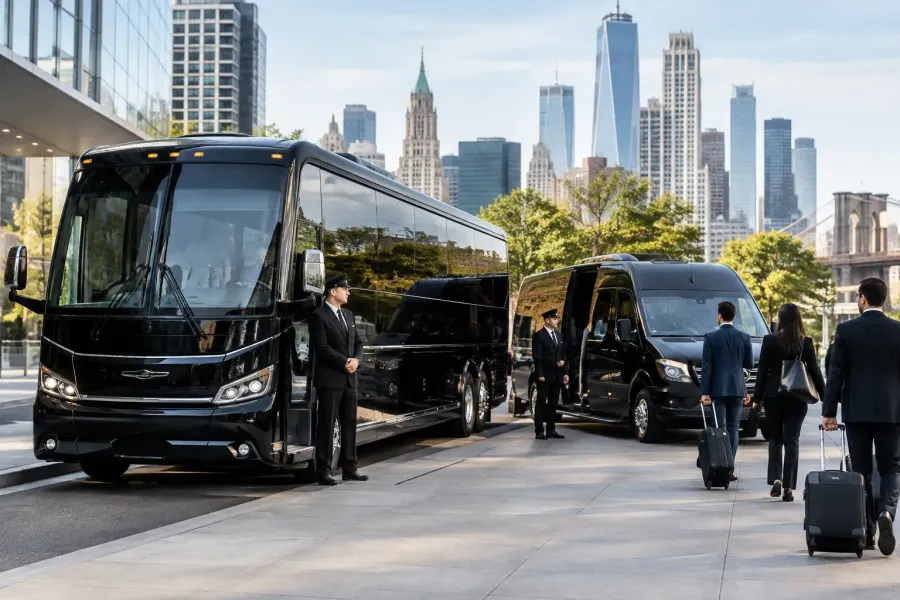
A Mercedes Benz Sprinter van can be an excellent choice for up to 14 passengers traveling between an airport, hotel, meeting, or dinner reservation. A 24 or 36 passenger minibus works well for employee groups attending conferences, training sessions, or company events. For larger groups, a full size motor coach can accommodate up to 56 passengers and may include a restroom and WiFi, which can be especially valuable for longer trips to Long Island, the Hamptons, or regional destinations.
The itinerary should guide the selection. A group attending several stops across Manhattan may need a vehicle available throughout the day. A group traveling one way from an airport to a hotel may only need a direct transfer. Planners should also consider luggage volume, accessibility needs, and whether passengers will be carrying presentation materials or event supplies.
Duty of Care Includes the Ride Between Events
Corporate planners are paying closer attention to traveler well being. That includes the travel experience after passengers leave the plane or hotel. A clean vehicle, an experienced professional driver, and a clearly communicated schedule help travelers feel looked after without adding complexity to the organizer’s workload.
Safety also depends on preparation. A transportation provider should understand the pickup location, the destination, the number of passengers, and the event timeline. When changes occur, the planner needs a responsive point of contact who can help adjust the service without creating confusion for the group.
This level of coordination is useful for executive travel, but it is just as important for employee shuttles, client entertainment, and large meetings. A corporate transportation plan works best when every passenger knows where to be, who to contact, and when the vehicle will depart.
Sustainability Is Becoming an Operations Question
Many companies have environmental goals, and business travel is part of that discussion. Ground transportation can support a more efficient approach when it replaces a large number of individual vehicles with one vehicle for the group. The practical benefit is often just as compelling as the environmental consideration. Fewer separate arrivals can reduce confusion at a venue, simplify parking, and make departure times easier to manage.
Still, sustainability decisions should be measured against the actual itinerary. A full size motor coach is highly efficient for a large group, while a Sprinter van may be the more sensible option for a small executive team. Group size, distance, luggage, and the number of scheduled stops all affect the best choice.
Planners should focus on reducing unnecessary vehicle trips while preserving the service level their travelers need. A thoughtfully designed route can do more than a broad policy statement. It can make the event run more smoothly from start to finish.
Flexible Planning Is a Competitive Advantage
Flight delays, changing attendee lists, and last minute meeting adjustments remain common in corporate travel. The strongest plans are detailed, but they also include room for reasonable changes. That means confirming key information early, then reviewing it again as the travel date approaches.
A useful transportation brief includes flight numbers, pickup times, passenger counts, hotel and venue addresses, luggage requirements, and the name of the onsite contact. It should also identify any important timing concerns, such as a conference check in window, a scheduled client presentation, or a cruise terminal departure. Clear information allows the transportation team to prepare the right vehicle and schedule service appropriately.
For organizers managing travel throughout New York City, Long Island, and the Hamptons, local route knowledge matters. Traffic patterns, venue procedures, airport operations, and loading restrictions can influence the schedule in ways that a map alone will not show. New York Bus Service helps corporate groups plan transportation around those real operating conditions.
The most useful trend to carry into your next corporate event is simple: treat transportation as part of the guest experience. When the vehicle, driver, timing, and communication are planned with care, your group can focus less on logistics and more on the reason they traveled together.