Are Buses Insured? What Group Organizers Should Know
A bus can look clean, comfortable, and ready for departure, but the details behind the reservation matter just as much as the seats inside. Are buses insured? Reputable charter bus and private group transportation providers carry commercial insurance designed for passenger transportation. Still, group organizers should understand what that coverage generally addresses, what questions to ask, and why the provider’s overall safety practices matter alongside an insurance policy.
For a corporate meeting, school trip, wedding, airport transfer, or family event, transportation is a responsibility. Choosing a professionally operated vehicle gives your group one coordinated travel plan, a qualified driver, and a provider that is accountable for the trip from pickup through final drop off.
Are Buses Insured for Passenger Transportation?
Professional bus companies typically maintain commercial auto liability insurance. This coverage is intended to protect against claims arising from an accident involving the vehicle and may address bodily injury or property damage, subject to the policy terms, limits, and applicable law.
The vehicle itself may also be protected through separate physical damage coverage. That is different from liability coverage. Liability coverage concerns harm or damage the vehicle may cause to others, while physical damage coverage helps protect the operator’s own vehicle after events such as a collision, theft, or certain weather related losses.
Insurance requirements and coverage amounts can vary based on the vehicle type, seating capacity, route, operating authority, and the jurisdictions involved. A full size motor coach carrying dozens of passengers may have different operational requirements than a smaller private van. The key point for a customer is simple. A credible transportation provider should be properly insured for the service it performs.
Insurance is not a substitute for safe operations. It is one part of a larger professional standard that also includes vehicle maintenance, driver qualifications, licensing, inspections, route planning, and clear communication with the customer.
What Insurance Coverage Means for Your Group
Insurance is often discussed after an incident, but its value begins before a vehicle ever arrives. It reflects that the transportation company has recognized the responsibilities involved in carrying passengers and operating on busy roads, airport approaches, event venues, and city streets.
For the organizer, proper coverage provides a layer of financial protection if an unexpected accident creates a claim. It can also be required by venues, schools, corporations, cruise terminals, or event planners before a bus is permitted to serve a program.
However, customers should avoid assuming that every expense connected to an interrupted trip is automatically covered. Policy language, fault, coverage limits, exclusions, and the facts of the situation all affect how a claim is handled. Questions about a specific incident should be directed to the transportation provider, the insurer, or qualified legal and insurance professionals.
The most practical goal is to choose a company that treats insurance as part of responsible operations, not as a detail to avoid discussing.
Questions to Ask Before You Book
You do not need to be an insurance expert to make a sound transportation decision. A few direct questions can help you confirm that the company is prepared to serve your group responsibly.
Ask whether the company carries commercial insurance appropriate for charter and group transportation. If your organization or venue requires documentation, ask whether a certificate of insurance can be provided. A certificate commonly confirms that coverage is in place on the date issued, though it is not the insurance policy itself.
It is also reasonable to ask about the company’s operating authority, vehicle inspection practices, and driver standards. The answers should be clear and consistent. A professional provider will understand that corporate administrators, school staff, wedding coordinators, and event planners need reliable documentation and straightforward communication.
When your itinerary includes several stops, an airport pickup, luggage handling, or a late evening return, explain those details before reserving. Accurate trip information helps the provider assign the right vehicle, schedule the driver appropriately, and plan the service around your group rather than forcing the group into a generic schedule.
Insurance Is Only One Sign of a Reliable Operator
A properly insured bus is essential, but it should not be the only factor in your decision. The quality of the operation determines what your group experiences throughout the day.
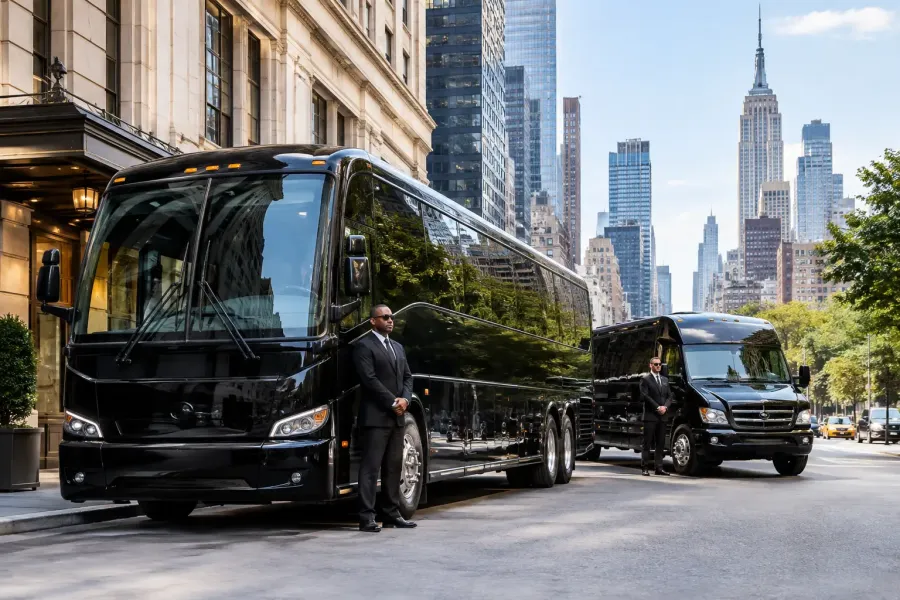
Start with the vehicle. The right capacity prevents overcrowding and gives passengers room for their belongings. A Mercedes Benz Sprinter van can work well for smaller executive groups or airport transfers. A minibus may be a better fit for a wedding party, campus visit, or team outing. For larger groups, a full size motor coach offers greater passenger capacity and may include amenities such as a restroom and WiFi.
Next, consider driver professionalism. A knowledgeable driver does more than operate the vehicle. They follow the planned schedule, navigate pickup procedures, manage safe loading and unloading, and help the group stay organized when traffic, venue access, or flight timing requires an adjustment.
Maintenance also deserves attention. Commercial passenger vehicles require ongoing inspection and service. A well maintained fleet supports reliability, comfort, and safe operation. While no transportation service can control every road condition or traffic delay, preparation reduces avoidable disruptions.
Finally, look at communication. A provider should confirm the date, passenger count, pickup location, destination, itinerary, vehicle selection, and special requirements before the trip. That planning is particularly valuable for groups traveling to JFK, LaGuardia, Newark, or a major event where timing and curb access can change quickly.
When a Certificate of Insurance May Be Needed
Some organizers need proof of insurance as part of their event planning process. Schools may request documentation before approving a field trip. Corporate offices may need it for a conference or employee transportation program. A wedding venue, hotel, stadium, or private property manager may also ask for it before allowing a vehicle on site.
Request this documentation early, especially if another organization must review it. Waiting until the day before departure can create unnecessary pressure for everyone involved. Give the transportation company the name and contact information for the certificate holder, along with any specific requirements from the venue or organization.
There is a practical balance here. Requesting appropriate documentation is responsible planning. Demanding complex policy interpretations from a reservation representative may not be productive. If your organization has unusually specific insurance requirements, share them during the quote process so the provider can determine whether it can meet them.
Planning a Safer, More Comfortable Trip
The best transportation plan combines the right vehicle, an experienced driver, realistic timing, and a provider with appropriate insurance and safety practices. Begin with an accurate headcount, including children, chaperones, luggage, mobility needs, and any equipment that will travel with the group.
Build extra time into airport, stadium, and Manhattan itineraries. Traffic, security procedures, loading zones, and group check in can all take longer than expected. A schedule with reasonable buffer time is more comfortable for passengers and easier for the driver to manage safely.
Keep one organizer as the main point of contact. That person should have the driver’s contact instructions, the final itinerary, venue details, and a way to reach passengers if plans change. For larger groups, this small step prevents confusion at pickup and keeps the day on schedule.
New York Bus Service supports group organizers with professionally driven transportation for corporate events, private celebrations, airport travel, school programs, tours, and other scheduled group trips across New York City and Long Island. The right service begins with a clear conversation about your group, your route, and what a successful day looks like.
Before you reserve, confirm the provider’s insurance, ask about its operating standards, and make sure the vehicle fits the people and plans you are responsible for. That preparation gives your group more than transportation. It gives them a well coordinated ride they can count on.