Manhattan Meeting Transportation Guide for Groups
A meeting agenda can be perfectly planned and still start poorly if attendees arrive scattered, late, or frustrated by Midtown traffic. For corporate administrators, executive assistants, and event planners, transportation is not simply a ride to the venue. It is a practical part of attendance management. This Manhattan meeting transportation guide explains how to coordinate group travel with realistic timing, the right vehicle, and one clear point of contact.
Start With the Meeting Schedule, Not the Vehicle
The first question is not how many seats you need. It is when every attendee must be inside the building, checked in, and ready to begin. A 9:00 a.m. meeting may require an 8:40 a.m. arrival at the venue, particularly when guests need to pass through lobby security, collect badges, use elevators, or find a conference floor.
Work backward from that required arrival time. Include time for loading at the pickup point, traffic along the route, curbside access near the venue, and a reasonable buffer for morning congestion. Manhattan schedules can change quickly when streets are restricted, weather affects traffic, or a major event is taking place nearby. A professional transportation plan allows room for those conditions rather than treating every minute as available travel time.
For meetings involving guests from several offices or hotels, decide whether a single pickup location is practical. One central departure point usually keeps the group organized and makes it easier to confirm that everyone is on board. Multiple stops can work for a smaller executive group, but each additional location adds time and creates more opportunities for delays.
Match the Vehicle to the Group and the Day
Vehicle selection should reflect more than passenger count. Consider luggage, presentation materials, accessibility needs, and whether the group will travel together between more than one meeting location. A vehicle that technically fits everyone may not be the most comfortable choice if attendees are carrying briefcases, computer bags, or event supplies.
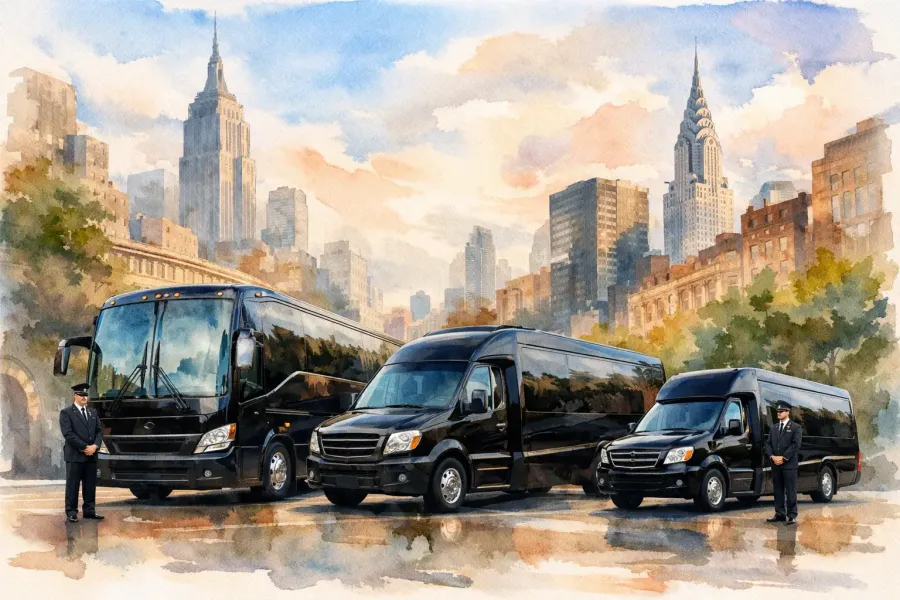
A Mercedes Benz Sprinter van is a practical option for executive groups of up to 14 passengers. It provides private transportation for airport arrivals, leadership meetings, client visits, and smaller offsite gatherings. For groups that need more capacity, a 24 or 36 passenger minibus provides comfortable seating while remaining well suited to Manhattan streets and coordinated hotel pickups.
A full size motor coach accommodates up to 56 passengers and can be the right choice for larger company meetings, conferences, employee transportation, and multi location programs. Motor coaches may include restrooms and WiFi, which can be especially helpful when the itinerary includes a longer transfer from Long Island, an airport, or a regional office before the Manhattan meeting begins.
The best choice depends on how the day is structured. A group attending one meeting and returning directly to its origin may only need a simple round trip. A group traveling between a hotel, a conference center, a client office, and a dinner reservation benefits from a vehicle and driver scheduled to remain available throughout the program.
Plan Manhattan Pickup and Drop Off Details Early
In Manhattan, the address alone is not enough. The transportation provider should have the venue name, entrance information, meeting floor if relevant, and a direct onsite contact. Some buildings have specific entrances for visitors, while others have restricted curb access or busy loading areas that affect where a vehicle can safely stop.
Share the preferred pickup time, not just the meeting start time. If your group is departing from a hotel, confirm where attendees should gather before boarding. A clearly communicated lobby meeting point prevents participants from waiting at separate doors or assuming the vehicle will stop on a different avenue.
For return service, establish a simple release plan. Tell attendees whether the vehicle will wait at the same location, a designated nearby corner, or another approved pickup point. The organizer should also identify who can authorize changes if the meeting runs longer than expected. Clear communication helps the driver and passengers respond calmly when plans change.
Account for Security and Building Access
Many Manhattan office towers require visitor registration. When a group is large, the check in process can take longer than expected. Send attendee names to the host in advance when appropriate, and ask whether identification is required. If the meeting involves a confidential client, financial institution, or government related location, allow additional time for screening.
Transportation cannot solve an unprepared building entry process, but it can support one. Arriving the group with enough time to enter together gives organizers the opportunity to manage badges, directions, and last minute attendance questions before the meeting starts.
Coordinate Airport Arrivals for Visiting Attendees
Business meetings often bring together guests arriving through JFK International Airport, LaGuardia Airport, Newark Liberty International Airport, or Teterboro Airport. Airport transportation requires a different level of planning because flights, baggage collection, and terminal access can affect the schedule.
Provide flight details, airline information, arrival times, and the number of passengers traveling together. If attendees are arriving on different flights, consider whether separate transfers are more practical than asking early arrivals to wait for a later flight. The right approach depends on the meeting start time, the size of each arriving group, and whether there is a comfortable place for guests to wait.
For same day arrivals, build in a generous buffer before the meeting. A delayed flight or extended baggage wait can put unnecessary pressure on both guests and organizers. When the schedule allows, bringing key attendees in the evening before a major morning meeting is often the more reliable choice.
Keep the Day Flexible Without Losing Control
A well planned itinerary should have structure, but it should also account for the fact that business meetings can change. A presentation may run long. A client may request an additional stop. A lunch location may shift. The most useful transportation arrangement is one that identifies likely needs in advance while maintaining a clear process for adjustments.
Before service begins, provide the driver and transportation coordinator with the complete itinerary, attendee count, timing expectations, and organizer contact information. Confirm whether the vehicle will be released after drop off or remain nearby for later service. This distinction matters because it affects how easily the group can transition to a second location.
For high visibility meetings, designate one transportation lead. That person should be able to communicate changes, confirm headcounts, and make decisions without requiring multiple approvals. A single informed contact helps prevent mixed messages during a busy event day.
Use Transportation to Improve the Attendee Experience
Group transportation creates a more organized arrival, but it also gives attendees time to prepare. On the way to a client presentation or company meeting, teams can review materials, confirm talking points, and arrive together with less distraction. For visiting guests, a private vehicle also removes the uncertainty of navigating an unfamiliar city between appointments.
Comfort and professionalism matter here. Clean, maintained vehicles and experienced professional drivers help set the right tone before an important meeting. For a group traveling from Long Island, Brooklyn, Queens, or another nearby area, riding together can also reduce the coordination burden of multiple personal vehicles and separate arrival times.
A Practical Manhattan Meeting Transportation Checklist
Before confirming transportation, make sure you have the meeting address, preferred entrance, required arrival time, passenger count, luggage needs, complete itinerary, onsite contact, and return plan. Confirm building access requirements, especially for groups entering a secure office tower or conference venue.
New York Bus Service can help organizers arrange private Sprinter van, minibus, and full size motor coach transportation based on the size of the group and the demands of the schedule. Share the full plan early, including every pickup, meeting, airport transfer, and return requirement, so the day can be scheduled with care.
A successful Manhattan meeting begins before the first agenda item. When transportation is planned around the people, the building, and the actual demands of the day, your group can arrive prepared, together, and focused on the business ahead.