NYC Convention Transportation Planning Guide
A convention agenda can be perfectly planned and still fall apart at the curb. When attendees arrive at different airports, meetings begin early, and a large venue has limited vehicle access, NYC convention transportation becomes a central part of the event experience. A professionally scheduled private vehicle gives your group a clear meeting point, a dependable arrival plan, and one less logistics issue for your team to manage.
For corporate administrators, executive assistants, event planners, exhibitors, and visiting teams, transportation should support the schedule rather than compete with it. The right plan considers where guests are arriving, when badges must be picked up, which entrances are available, and how the group will travel after the convention floor closes.
Start With the Convention Schedule, Not the Vehicle
The most effective transportation plan begins with the event itinerary. Before selecting a Sprinter van, minibus, or full size motor coach, identify the moments when your group must be together. Airport arrivals, hotel departures, exhibit setup, keynote sessions, client dinners, and return flights all affect the vehicle schedule.
Convention travel often includes more than one passenger group. Executives may arrive at one time, sales staff at another, and exhibit materials may require a separate delivery plan. A single vehicle is not always the best answer. It depends on the number of travelers, their luggage, their arrival windows, and whether the schedule requires continuous service during the day.
Build in realistic time for hotel loading, convention center traffic, security procedures, and walking from the drop off point to registration. A schedule that works on paper can become difficult if it assumes every guest is ready at the same minute. Giving the driver accurate pickup times, passenger counts, and location details helps create a practical plan that protects your most important appointments.
Identify the High Priority Trips
Most convention groups have a few trips that cannot be late. These commonly include airport transfers for speakers or executives, morning departures to the venue, transportation to an offsite reception, and final departures after the event. Reserve those times first, then determine whether additional transportation is needed for flexible trips.
If your group is attending an event at the Jacob K. Javits Convention Center, for example, arrival timing matters. Nearby streets can be active before major sessions and at the end of the day. A professional driver who has the itinerary and designated pickup instructions can help the group arrive prepared rather than searching for transportation in a crowded area.
Choose a Vehicle That Fits the Full Group
Passenger count is only one part of choosing convention transportation. Luggage, presentation materials, personal comfort, and the length of each ride matter too. A vehicle that is technically large enough may not be the most comfortable option when travelers are carrying garment bags, cases, or airport luggage.
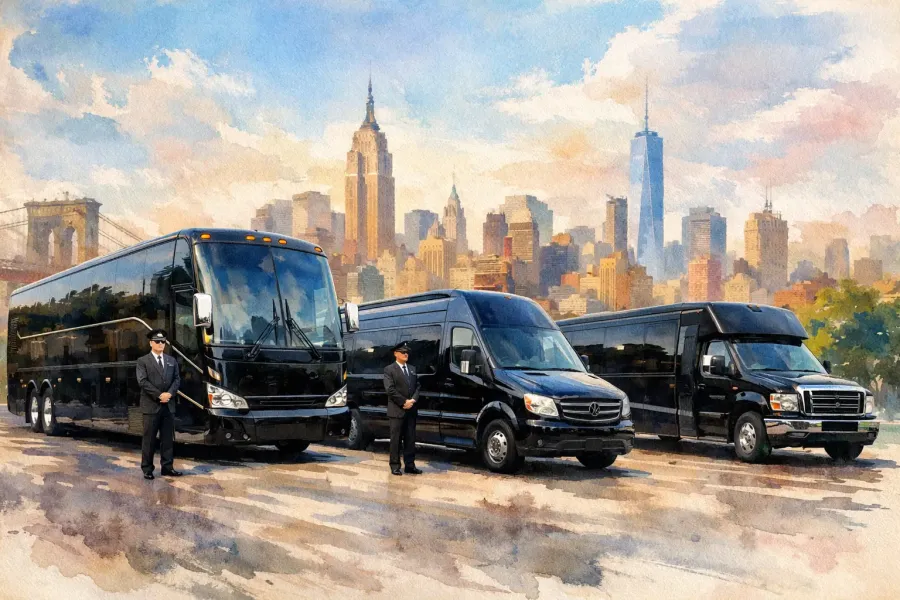
A Mercedes Benz Sprinter van can accommodate up to 14 passengers and is a strong choice for executive teams, speakers, and small exhibitor groups. It offers a private, comfortable way to travel between an airport, hotel, venue, or dinner reservation without dividing the group between several vehicles.
For larger teams, a 24 or 36 passenger minibus provides efficient transportation for staff, attendees, and corporate guests. Minibuses work especially well for hotel to venue service, evening events, and groups that need a consistent vehicle throughout the convention schedule.
A full size motor coach can accommodate up to 56 passengers. It is often the right choice for large delegations, association meetings, employee groups, and convention attendees arriving together. Motor coaches may include a restroom and WiFi, which can add comfort during longer trips from Long Island, airport transfers, or travel to regional offsite events.
Keep the Group Together When It Matters
Splitting attendees into separate vehicles can create avoidable problems. One group may arrive before another, a key contact may be in the wrong vehicle, or people may miss instructions shared during the ride. For a scheduled convention transfer, keeping colleagues together gives the organizer more control over timing and communication.
There are situations where separate vehicles make sense. A smaller Sprinter van for senior leaders and a minibus for the wider team can fit different arrival schedules. The goal is not to use the largest vehicle available. The goal is to match each portion of the itinerary to a comfortable and efficient transportation solution.
Plan Airport Transfers Around Real Arrival Times
JFK International Airport, LaGuardia Airport, Newark Liberty International Airport, and Teterboro Airport all serve convention travelers, but each requires a different approach to timing and pickup coordination. Flight arrival time is only the beginning. Guests may need time to deplane, collect luggage, meet colleagues, and reach the designated pickup area.
For groups arriving on multiple flights, establish a clear waiting policy before the trip. In some cases, it is more efficient to schedule separate pickups for separate arrival blocks. In others, a vehicle can wait for a group arriving within a reasonable window. The right choice depends on the importance of getting to the venue quickly and the flexibility of the first day schedule.
Share a single point of contact with attendees before travel begins. Guests should know who to call if a flight is delayed, where to meet the driver, and what details to provide if their arrival changes. This small step can prevent confusion when several people are arriving from different cities.
Account for Venue Access and Daily Operations
A convention venue may have specific rules for coach access, loading zones, vehicle staging, and pickup locations. These procedures can change during large events, so transportation planning should include confirmation of the venue instructions close to the event date.
Provide your transportation provider with the hotel name, venue name, preferred entrance, event contact, and full daily schedule. If the group will be traveling to a restaurant or private event after convention hours, provide that information as early as possible. Last minute changes are sometimes unavoidable, but advance details allow for better route planning and driver preparation.
Morning departures deserve special attention. Rather than scheduling the bus for the exact time the convention begins, schedule around when your group needs to be through the entrance, checked in, and ready for the first session. The same principle applies to evening pickups. A defined pickup location and a realistic departure window make it easier for everyone to leave together.
Give Your Driver Useful Information
Professional drivers bring local experience, but they also need accurate event details. Let them know whether guests have mobility needs, whether luggage or display materials will be loaded, and whether a coordinator will be traveling with the group. If your itinerary includes multiple stops, provide the order of stops and the best contact at each location.
A transportation plan works best when one organizer has authority to confirm changes. This prevents conflicting instructions and gives the driver a reliable contact if traffic conditions or event timing require an adjustment.
Build Comfort Into the Attendee Experience
Convention days can be long. Guests may spend hours on the exhibit floor, participate in meetings, and attend evening functions before returning to the hotel. Comfortable private transportation gives attendees a chance to regroup between commitments, check messages, prepare for a presentation, or simply rest.
Vehicle cleanliness, professional service, and punctual pickup are not minor details. They shape how guests experience the entire event. This is particularly meaningful for client groups, executive visitors, and employees who are traveling on behalf of the organization.
New York Bus Service provides personalized transportation planning for convention groups throughout New York City and Long Island, with modern vehicles sized for small executive teams through large attendee groups. A properly scheduled private vehicle can simplify airport transfers, venue transportation, and evening event service while keeping your group focused on the convention itself.
Reserve Early for Major Convention Dates
New York convention calendars can create high demand for group transportation, especially when large trade shows, corporate meetings, and seasonal events overlap. Reserving early gives you more flexibility with vehicle selection and allows time to refine pickup schedules as attendee lists become final.
When requesting transportation, provide the estimated passenger count, travel dates, pickup and destination addresses, flight information when applicable, and any special itinerary needs. If details are still being finalized, start with the known trips and update the plan as the event approaches.
A well organized convention transportation plan does more than get people from one address to another. It helps your team arrive composed, stay on schedule, and leave every guest with confidence in how the event was managed.