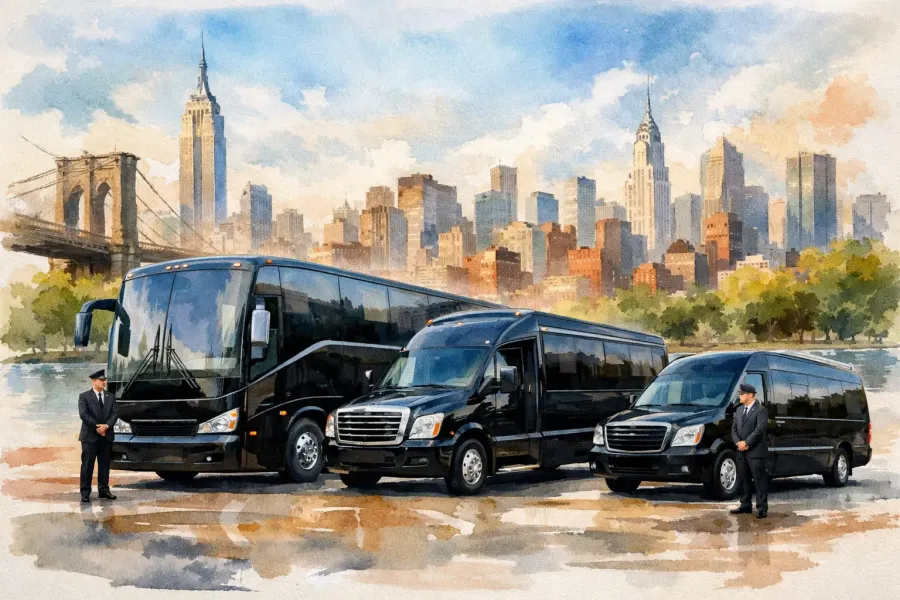
Sustainable Charter Bus Travel for New York Groups
A corporate team leaving Manhattan for a Long Island retreat does not need 20 separate cars filling a parking lot. A wedding party traveling from a hotel to the venue does not need guests comparing directions, arranging parking, and arriving at different times. Sustainable charter bus travel begins with a practical decision: move more people together, on one coordinated itinerary.
For group organizers, sustainability is not only about the vehicle. It is about reducing unnecessary trips, choosing the right capacity, planning a sensible route, and giving every passenger a reliable alternative to driving separately. When those details are managed well, group transportation can lower congestion, simplify logistics, and make the day more comfortable for everyone involved.
Why Group Transportation Can Be a More Sustainable Choice
A full size motor coach can accommodate up to 56 passengers, while minibuses and Mercedes Benz Sprinter vans serve smaller groups. When a vehicle is reasonably full, it can replace a significant number of private vehicles traveling to the same destination. That means fewer individual parking searches, fewer arrivals spread across a wide time window, and less traffic generated by the event itself.
The environmental benefit depends on passenger count and trip planning. A nearly full coach traveling directly from a pickup location to a destination will generally use transportation resources more efficiently per passenger than dozens of individual cars. A large bus carrying only a small group, however, may not be the most efficient choice. The responsible approach is to match the vehicle to the actual headcount, luggage needs, accessibility requirements, and itinerary.
This matters throughout New York City and Long Island, where traffic, limited parking, and event schedules can make separate vehicle travel particularly inefficient. A professionally planned group trip gives organizers greater control over when people leave, where they are picked up, and how the vehicle is used during the day.
Sustainable Charter Bus Travel Starts With the Right Vehicle
Vehicle selection has a direct effect on both comfort and efficiency. A group of eight executives traveling to JFK International Airport may be well served by a Mercedes Benz Sprinter van. A school group, wedding guest list, or company outing may require a minibus or a full size charter bus with additional seating, luggage space, and onboard amenities.
Choosing more seats than necessary is not always the best answer. A larger vehicle may still be appropriate when passengers are carrying luggage, sports equipment, presentation materials, or formal event attire. It may also be the right choice when a group needs a restroom, WiFi, or room to travel comfortably on a longer route. The goal is not simply to select the smallest option. It is to select the vehicle that supports the trip without creating avoidable extra capacity or requiring a second vehicle later.
A transportation provider should ask clear questions before recommending equipment. How many passengers are traveling? Are there multiple pickup points? Will the group have checked luggage? Does the vehicle need to wait during the event? Are there mobility needs or a strict airport arrival time? Accurate answers support a more efficient plan and help avoid last minute changes that can add unnecessary mileage.
Full Vehicles Make a Meaningful Difference
Passenger occupancy is one of the clearest factors in sustainable group travel. Encouraging attendees to use the reserved transportation, rather than drive independently, improves the value of the charter. For corporate meetings and weddings, organizers can include the pickup time and location in every event communication, then make the bus the simplest option.
For larger events with guests arriving from several areas, a few well chosen pickup locations are often more efficient than attempting door to door service for every passenger. It is a balance. Convenience matters, especially for senior guests, families, and travelers with luggage. But a route with too many stops can lengthen travel time, increase idling, and make the experience less dependable.
Plan Routes That Respect Time and Traffic
New York area travel is rarely as simple as entering an address into a map. A route to a Midtown meeting can be affected by street closures, loading restrictions, event traffic, and the time of day. A trip to the Hamptons may require careful departure timing to avoid predictable congestion. Airport transportation must account for terminal access, luggage loading, airline schedules, and the time needed for the entire group to gather.
Thoughtful planning reduces unnecessary miles and protects the schedule. A single central pickup may work well for an employee shuttle. A wedding may need a hotel pickup, venue transfer, and scheduled return service so guests can travel together safely. A school trip may require a route that includes timed admissions, meal stops, and a precise return window.
Professional drivers and dispatch planning are valuable because they bring operational awareness to the itinerary. The best plan is not always the shortest route on paper. It is the route that supports safe access, realistic travel time, legal loading locations, and an on time arrival.
Avoid Unnecessary Vehicle Waiting
Charter service can be arranged as a one way transfer, a round trip, or transportation that remains available during the event. Each option has a purpose. If a group will not need transportation for several hours, a planned return time may be more efficient than keeping a vehicle waiting nearby. If the schedule is uncertain, dedicated availability may be worth the added cost and vehicle time.
Organizers should discuss the full itinerary before booking. Include ceremony timing, meeting end times, airport flight details, restaurant reservations, and any planned stops. A complete schedule allows the transportation plan to reflect real needs instead of assumptions.
Small Travel Choices Add Up
Sustainable travel also depends on the habits of the people organizing and taking the trip. Digital itineraries can reduce printed materials. Reusable water bottles can limit single use waste on longer outings. A clear meeting point prevents passengers from circling a venue or calling for individual pickups after the group has departed.
For tours and winery outings, build an itinerary with realistic stop durations and geographic order. For airport transfers, collect flight details and luggage estimates early. For sporting events, confirm stadium access procedures and designate a clear postgame meeting location. These are operational details, but they also help prevent duplicate trips, unnecessary waiting, and avoidable confusion.
Maintenance and Professional Operation Matter
A well maintained vehicle is fundamental to dependable transportation. Regular inspections, professional drivers, clean interiors, and properly scheduled service all help reduce the risk of disruptions that can force a group to find replacement transportation at the last minute.
No transportation option is impact free. Fuel use, distance, passenger count, traffic conditions, and vehicle type all affect the overall result. Still, replacing numerous individual trips with a properly sized, professionally operated vehicle is a practical step many organizations and families can take now.
Make Sustainability Part of the Booking Conversation
When requesting a quote, explain the group size, trip purpose, locations, timing, and expected luggage. Ask which vehicle category best fits the group and whether the itinerary can be organized around fewer, more useful pickup points. If your schedule allows flexibility, ask whether an adjusted departure time could reduce time spent in heavy traffic.
New York Bus Service helps groups plan charter bus, minibus, and van transportation that fits the trip rather than forcing every event into the same format. From airport transfers to corporate meetings, school trips, weddings, and private tours, careful coordination can make group travel easier to manage and more considerate of the roads everyone shares.
The most sustainable trip is often the one planned early, sized correctly, and communicated clearly, so every passenger has one comfortable, dependable way to travel together.