Best Buses for Wedding Guests for Every Guest List
A wedding day can run beautifully until 40 guests are circling a Long Island venue looking for parking, a few relatives arrive late, and the ceremony start time begins to slip. The best buses for wedding guests prevent that chain reaction. With a professionally driven vehicle and a clear transportation plan, guests arrive together, on time, and ready to celebrate rather than navigate unfamiliar roads.
For weddings in New York City, Long Island, and the Hamptons, the right vehicle is not always the largest one. It is the one that matches your guest count, travel distance, venue access, and schedule. A thoughtful plan also gives guests a comfortable way to enjoy the reception without worrying about driving afterward.
Best Buses for Wedding Guests by Group Size
Start with the number of passengers who genuinely need transportation, not the total number on the invitation list. Guests staying at a hotel, traveling from a designated pickup point, or attending an after-party may all have different needs. A transportation provider can help turn those details into a practical vehicle plan.
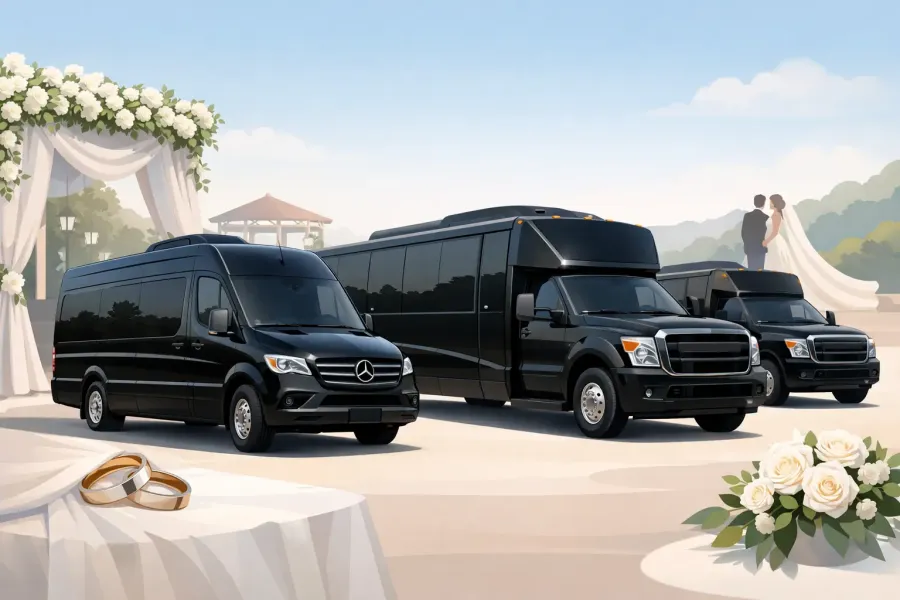
Mercedes Sprinter vans for intimate wedding groups
A Mercedes Sprinter van is a strong choice for up to 14 passengers. It works especially well for the wedding party, immediate family, or VIP guests who need a direct ride from a hotel to the ceremony, photo location, and reception venue.
Sprinter vans are also useful when an estate, restaurant, or waterfront venue has limited space for larger vehicles. For a smaller group, they offer a more personal experience while keeping the day organized. They can be scheduled separately from guest transportation, allowing the wedding party to leave earlier for photographs or arrive at a different entrance.
Minibuses for medium-sized guest groups
Minibuses are often the most practical option for wedding groups that are too large for a van but do not require a full motor coach. With configurations that serve approximately 24 to 36 passengers, they are well suited for guests traveling from one hotel, a nearby train station, or a central meeting point.
This option is a good fit for couples who want to provide transportation without reserving more seats than needed. It can also work well for two pickup locations, with one vehicle assigned to each hotel. The key is to avoid building a schedule around a perfectly full bus. Allowing a few open seats makes room for last-minute family changes and keeps boarding comfortable.
Full-size motor coaches for larger weddings
For larger guest lists, a full-size motor coach can accommodate up to 56 passengers. This is often the best choice when many guests are staying at the same hotel or when the route includes a longer trip between New York City and a Long Island or Hamptons venue.
A full-size coach provides the capacity to keep a large portion of the guest list together. On longer routes, features such as onboard WiFi and a bathroom can make the trip more comfortable. These details matter when guests include grandparents, families with children, or visitors unfamiliar with the area.
For a wedding with 90 or 120 guests needing transportation, multiple vehicles may be more effective than trying to manage several separate departure waves with one coach. The right approach depends on the venue’s arrival area, the timing of the ceremony, and how many guests are expected to use the service.
Match the Vehicle to the Wedding Schedule
Capacity is only part of the decision. Wedding transportation succeeds when the vehicle schedule supports the rhythm of the day. A direct 20-minute route may require a much larger time window once guest boarding, Manhattan traffic, venue access, and photo stops are considered.
For most weddings, guests benefit from a clear outbound plan and a clearly announced return plan. The outbound trip should get everyone to the venue with enough time to be seated before the ceremony. It is better for guests to have time for a welcome drink than to step off the bus feeling rushed.
The return plan depends on your reception. One departure at the end of the evening works for a shorter celebration or a group that is likely to leave together. Two return departures are often better for longer receptions, especially when some guests may want to depart earlier. A professional transportation coordinator can build those times around your actual timeline rather than relying on broad estimates.
Comfort Details That Matter to Wedding Guests
Wedding transportation should feel dependable and well planned, not like an afterthought. Clean, maintained vehicles, professional drivers, and easy boarding are essential. Comfort matters even more for guests in formal attire, older relatives, and anyone traveling from out of town.
Consider the route before selecting a vehicle. A short transfer from a Garden City hotel to a nearby reception may call for a simple, efficient minibus. A longer trip to Southampton, East Hampton, or another Hamptons destination may make a motor coach with a bathroom a more comfortable choice.
There is also a practical question of what guests will bring. Overnight bags, garment bags, welcome boxes, and umbrellas can take up more space than expected. Mention these items during planning so the transportation arrangement accounts for passenger comfort as well as seating.
Plan Pickup Points That Guests Can Actually Find
A transportation plan can be perfectly timed and still create confusion if guests do not know where to board. Hotel main entrances, clearly identified lobby areas, and designated curbside locations are usually easier to manage than vague instructions such as “meet outside.”
Your wedding website, welcome card, or event message should identify the pickup location, boarding time, departure time, and a reminder that the vehicle must leave on schedule. Boarding time and departure time should be different. Asking guests to board 15 minutes before departure creates a buffer without making anyone guess when the vehicle will arrive.
If your group is coming from several hotels, do not automatically assume every stop can be included on one route. Each additional stop adds travel time and creates another opportunity for delays. In many cases, separate vehicles or a single centralized pickup point is the more reliable choice.
Questions to Settle Before Reserving Wedding Transportation
Before confirming a vehicle, gather the details that affect service most directly. A transportation provider will need more than a passenger count to create a dependable plan. Have these points ready:
- Estimated passenger count for each trip, including the wedding party and family members
- Pickup and drop-off addresses, plus any hotel, venue, or property access instructions
- Ceremony, reception, and final return times
- Number of return departures desired
- Luggage, mobility, or special seating considerations
These details help determine whether one vehicle, multiple vehicles, or a combination of a Sprinter van, minibus, and motor coach makes the most sense. They also allow the driver and dispatch team to prepare for the actual route and timing.
When One Bus Is Better Than Multiple Smaller Vehicles
One larger coach can simplify communication and ensure guests arrive as a group. It is often ideal for a hotel block traveling to a venue outside the city, particularly when parking is limited. It can also create a more relaxed beginning to the celebration, since guests can talk and travel together.
Multiple smaller vehicles can be the better choice when guest pickups are spread across different locations, roads are narrow, or the venue has limited turnaround space. They also provide flexibility when the wedding party and guests need different schedules. There is no universal answer, which is why route planning should happen before the vehicle is selected.
For couples planning a wedding in New York City, Long Island, or the Hamptons, New York Bus Service can coordinate professionally driven Sprinter vans, minibuses, and full-size motor coaches around the schedule that matters most: yours. Give your guests clear instructions, allow time for boarding, and choose a vehicle plan that lets everyone focus on the wedding instead of the logistics.