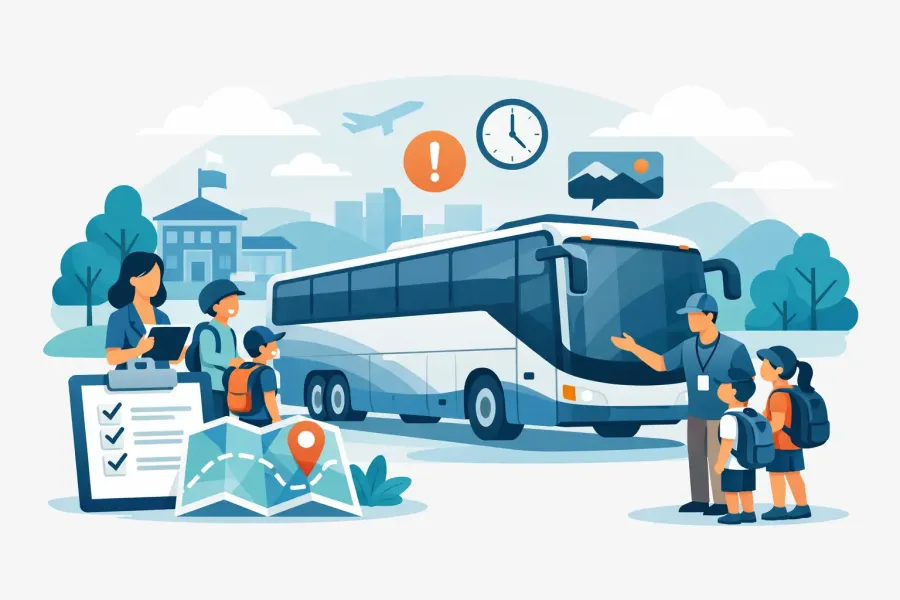
School Field Trip Charter Bus Planning Guide
A school field trip charter bus does more than bring students from point A to point B. It sets the pace for the day. When one vehicle, one professional driver, and one clear itinerary keep the group together, teachers can focus on attendance, learning objectives, and student supervision instead of parking logistics and late arrivals.
For New York City and Long Island schools, transportation planning can be especially detailed. Museum loading zones, campus entrances, city traffic, bridge restrictions, meal stops, and dismissal schedules all affect the trip. The strongest plan starts with the group’s actual needs, then matches those needs to a properly sized vehicle and a realistic timeline.
Start With the Day’s Full Itinerary
Before requesting transportation, put the entire schedule in writing. Include the school departure time, the desired arrival time, destination address, planned stops, return departure, and final drop-off location. A charter provider can plan more accurately when the itinerary identifies the details that often cause delays, such as a designated bus entrance, a timed admission, or a required security check.
Build in time for loading and unloading. A group of students does not board as quickly as a small adult group, particularly when teachers are checking attendance, distributing materials, and making sure everyone has what they need. For a morning departure, it is often helpful to schedule the vehicle to arrive before students are expected to board. That gives the trip leader time to meet the driver, confirm the plan, and organize the group without pressure.
If the day includes multiple stops, share every location during the planning stage. A stop for lunch, a performance, a college tour, or a waterfront activity can change the route, parking plan, and total vehicle time. Last-minute additions may be possible, but advance planning gives the transportation team the best opportunity to keep the day on schedule.
Choose the Right School Field Trip Charter Bus
Vehicle size should be based on passenger count, chaperones, bags, mobility needs, and the length of the trip. Choosing a bus that is too small can make a full day uncomfortable. Choosing a much larger vehicle than necessary may not be the most efficient option, especially for a short local program.
For smaller groups, a Mercedes Sprinter van can accommodate up to 14 passengers. It can be a practical choice for an academic competition, a small club outing, or a faculty-led campus visit. Minibuses work well for medium-sized groups that need everyone to travel together while keeping the vehicle appropriate for the group size.
For larger classes and grade-level outings, a full-size motor coach can accommodate up to 56 passengers. This option is particularly useful for longer regional travel, all-day programs, and trips where onboard comfort matters. Full-size motor coaches can include a restroom and Wi-Fi, helping support a more comfortable ride when students and chaperones will be on the road for several hours.
The best choice depends on the trip. A 20-minute ride to a nearby cultural institution has different requirements than a full-day journey to a university, historic site, sporting event, or outdoor education program. Share the expected passenger count early, then confirm whether seats are needed for teachers, aides, parent chaperones, and any additional staff.
Make Safety and Supervision Part of the Transportation Plan
A well-run field trip depends on clear responsibilities. The transportation provider is responsible for operating the vehicle safely and following the agreed itinerary. School staff remain responsible for student supervision, headcounts, behavior expectations, and communicating any school-specific procedures to the group.
Before departure, the trip leader should confirm a primary contact person and a backup contact person. Both should have the driver’s trip details and the transportation company’s dispatch information. This helps if a teacher needs to report a delayed departure from the destination, a change to the pickup gate, or an unexpected issue during the day.
It is also wise to establish a simple student boarding process. Teachers may assign seating, count students before departure and after each stop, and keep chaperones positioned throughout the vehicle. The right approach varies by age group, but consistency matters. Students should know that they stay with their assigned group and wait for a teacher’s direction before boarding or exiting.
When reviewing transportation options, ask about vehicle maintenance practices, professional driver qualifications, and the company’s experience with group itineraries. Clean, inspected vehicles and experienced drivers support a more confident trip environment. Clear communication matters just as much. The driver should receive the accurate schedule, destination instructions, and any known access considerations before the day begins.
Plan for New York Pickup, Parking, and Timing Challenges
New York field trips often involve conditions that are not obvious on a map. A destination may have a dedicated bus drop-off area but no nearby waiting space. A school may have limited curb access at dismissal. A venue in Manhattan may require a precise arrival window to avoid congestion around its entrance.
Ask the destination where charter buses should arrive, unload, and return for pickup. Do not assume the main public entrance is the right location for a motor coach. Some museums, theaters, universities, and event venues provide specific instructions for group transportation. Passing those instructions along in advance helps avoid confusion on arrival.
Traffic conditions can also change quickly. Schedule enough travel time for the route and avoid making the itinerary so tight that one delay affects every activity afterward. If a timed program cannot be missed, consider planning an earlier arrival and allowing students time for a supervised snack, restroom break, or orientation before the event begins.
For trips leaving New York City for Long Island, the Hudson Valley, or other regional destinations, account for the return window as carefully as the morning departure. Afternoon traffic, student fatigue, and a late venue release can all affect the final arrival time. Families and school administrators appreciate a realistic return estimate more than an overly optimistic one.
Give Chaperones the Information They Need
Chaperones are most effective when they know the transportation plan before students arrive. Provide the departure time, meeting location, vehicle description, student roster process, destination contact information, meal plan, and expected return time. They should also know who will speak with the driver if the itinerary needs attention during the trip.
A short pre-trip briefing can prevent unnecessary confusion. Explain when headcounts will happen, which groups each chaperone is responsible for, and where students should gather after the program. For younger students, visual identifiers such as matching lanyards or group labels can make it easier to keep everyone organized in a busy public setting.
It helps to prepare for the ordinary issues that occur during school travel: a student needs a restroom before departure, a group takes longer than expected to exit an exhibit, or weather changes an outdoor activity. A modest schedule buffer and direct communication between trip leaders and the driver can keep these moments from becoming major disruptions.
Request a Clear, Complete Transportation Quote
When requesting a quote, provide the date, group size, pickup address, complete itinerary, and estimated hours of service. Mention whether the group has luggage, instruments, presentation materials, sports equipment, or accessibility considerations. These details help the provider recommend a vehicle that fits the trip rather than simply offering the largest available option.
Ask what is included in the transportation plan and confirm the expected service window. If your itinerary may change, discuss that possibility early. Some trips have fixed schedules, while others depend on weather, tournament progression, or venue timing. Knowing how adjustments are handled gives trip leaders a clearer plan if the day does not unfold exactly as expected.
New York Bus Service helps schools coordinate professionally driven transportation for educational outings, campus visits, performances, and regional programs. With vehicle options for groups from 2 to 56 passengers, organizers can match the transportation plan to the class size and itinerary.
The best field trips feel easy to students because the adults planned carefully behind the scenes. Set the schedule early, confirm the right vehicle, share pickup instructions, and leave enough room for the real pace of group travel. That preparation turns transportation into a dependable part of the learning experience.